
Toddler Meal Plan: A Practical Day-by-Day Guide for Ages 1–3
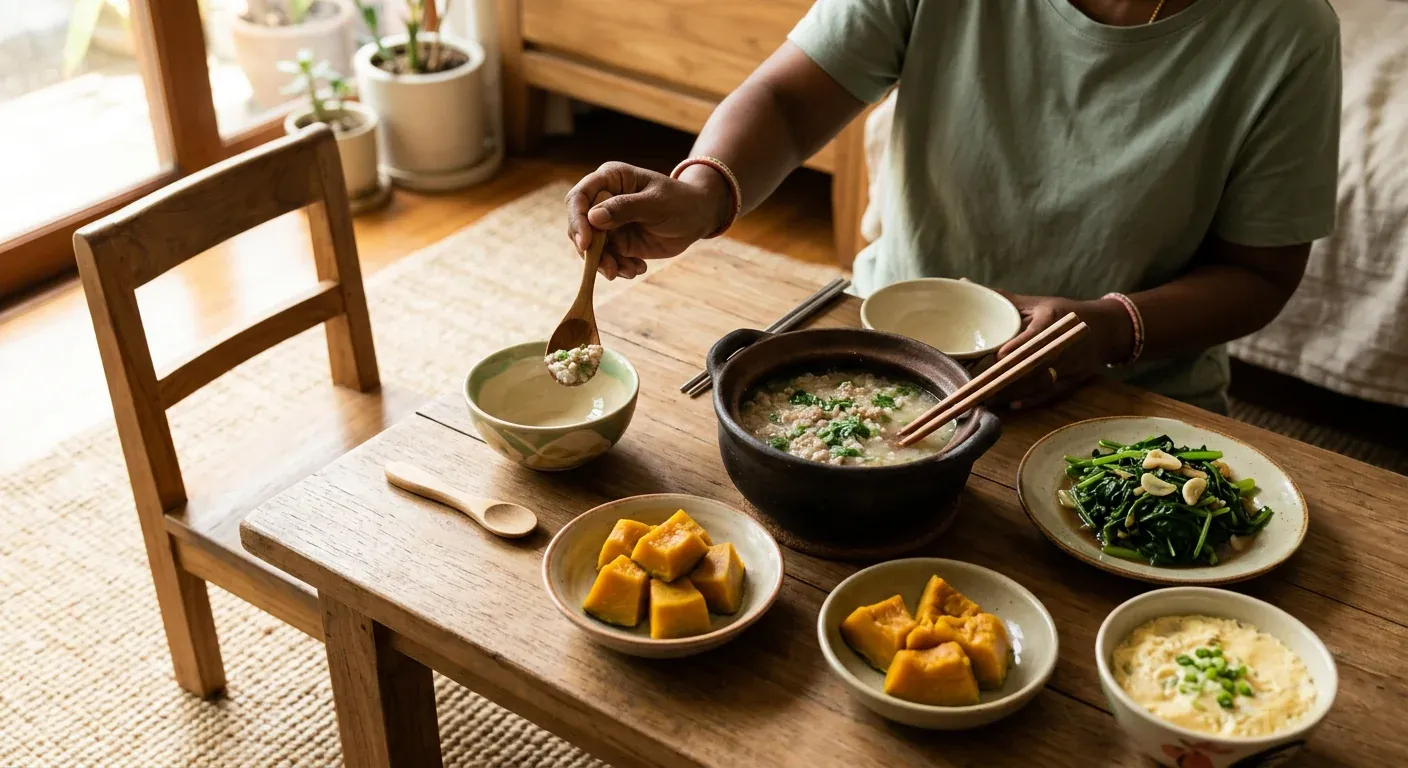
Same food, same table, same family — just a smaller portion and softer texture. The best toddler meal plan isn't a separate menu. It's yours, adapted.
Your toddler turned one and suddenly the rules changed: no more purées, no more single-ingredient jars, no more formula. Now what? Thai parents searching for "เมนูเด็ก 1 ขวบ" often find Western cereal-and-toast templates that don't match how Thai families actually eat. This guide starts from the same table.
The AAP's nutrition framework for toddlers ages 12–36 months [1] [2] sits naturally alongside Thai family-style dining — and this article shows exactly how. The structure here is distinct from the feeding philosophy covered in Picky Eating: that article explains the Division of Responsibility and why battles backfire; this one gives you the actual daily meal pattern to build from.
The Toddler Meal Pattern: 3 Meals + 1–2 Snacks
The AAP recommends three meals plus one or two snacks per day [1], with no grazing between structured eating times. Predictable timing lets a toddler arrive at the table with genuine hunger — the most reliable appetite opener available.
Each meal should include something from each of these groups:
- A protein — meat, fish, egg, beans, or tofu
- A carbohydrate/grain — rice, whole-grain bread, oats, or pasta
- A vegetable — varied colors (orange/red for beta-carotene, dark green for iron and folate)
- A fruit — whole or cut, not juice
- A fat source — olive oil, coconut oil (small amount), avocado, or fatty fish like salmon or mackerel
Not every item needs to appear at every single meal — a snack can be simpler — but over the course of a day, each group should be represented.
What grazing does: Toddlers allowed to sip milk or pick at crackers between meals arrive at the next meal without hunger. Structured timing is the scaffolding that makes toddlers actually eat at mealtimes — and later, be willing to try new foods.
Food Groups and Daily Targets (Ages 1–3)
Based on AAP guidance [1] [2], here are the daily food-group targets for toddlers. Use these as a compass, not a checklist — a toddler who eats well some days and little on others is entirely normal.
Dairy: 2–2½ cups per day
For ages 12–24 months: about 16 oz (2 cups) of whole cow's milk per day [3]. At age 2, low-fat or nonfat milk becomes an option.
Dairy doesn't have to be all milk. A portion of yogurt or a small cube of cheese counts. Avoid exceeding 16 oz of milk for 12–24-month-olds — too much milk suppresses appetite for iron-rich solid food and is a documented driver of iron-deficiency in toddlers [4].
Protein: 2 servings per day
One serving = 1 oz of meat, poultry, or fish (two 1-inch cubes or 2 tablespoons of ground meat); or ½ an egg; or ¼ cup of cooked beans or lentils [2]. A whole egg per day is fine and a common practical portion; the formal "serving size" on the AAP table is ½ egg. Vary the sources across the week. Thai toddler-friendly protein sources include:
- ไข่ตุ๋น (steamed egg) — smooth texture, easy to eat
- ปลานึ่ง (steamed fish) — bones removed, soft flesh; salmon and mackerel excellent for omega-3
- ข้าวต้มหมู (rice porridge with pork) — the classic Thai toddler food; a natural complete meal
- ถั่วเขียวต้ม (cooked mung beans) — iron-rich, soft when well-cooked
- เต้าหู้นุ่ม (soft tofu) — low-sodium option; easy to mash or dice
Grains: 2–3 servings per day
One serving = about 4 tablespoons cooked rice or pasta; or ¼ to ½ slice of bread [2]. Whole grains are preferred — ข้าวกล้อง (brown rice) mixed with white rice is a good Thai approach. Rice porridge (ข้าวต้ม) counts and is easy to modify in texture. The AAP one-day menu for a two-year-old illustrates a daily total of roughly 2–3 servings of grains spread across meals and snacks [1].
Fruits: 1 cup per day
Varied whole fruits, not juice. Ideal Thai toddler fruits: กล้วย (banana — perfect soft finger food from 12 months), มะละกอสุก (ripe papaya — soft and rich in vitamin C), แตงโมเนื้ออ่อน (soft watermelon, seeded), ส้ม (orange segments — remove membrane for young toddlers).
Vegetables: 1 cup per day
Aim for variety of color. Thai toddler-appropriate vegetables, cooked until soft:
- ฟักทองนึ่ง (steamed pumpkin) — naturally sweet, orange, rich in beta-carotene
- ผักโขม (spinach) or ตำลึง — dark leafy greens high in iron and folate
- มะเขือเทศ (tomato) — vitamin C; cut cherry tomatoes into quarters (whole cherry tomatoes are a choking hazard)
- แครอทต้ม (cooked carrot) — raw is a choking hazard; steamed or boiled is safe and sweet
- บวบ (ridge gourd) — common in Thai clear soups, very soft when cooked
Healthy fats
Small amounts at each meal: a drizzle of olive oil or coconut oil in stir-fries, avocado pieces, or fatty fish. Fats are essential for toddler brain development and should not be restricted.
Iron: The Highest-Priority Nutrient for Thai Toddlers
Iron deficiency is the most common nutritional gap in toddlers. The AAP recommends universal iron-deficiency screening at 12 months [4], partly because the combination of high milk intake + low meat intake is widespread among toddlers.
Iron-rich foods to build into the weekly meal plan:
| Food | Thai name | Notes |
|---|---|---|
| Red meat (pork/beef) | เนื้อหมู / เนื้อวัว | Small portions; ground or minced for texture |
| Egg yolk | ไข่แดง | 1 egg per day is appropriate |
| Mung beans, kidney beans | ถั่วเขียว, ถั่วแดง | Cook until very soft |
| Iron-fortified infant cereal | ซีเรียลเสริมธาตุเหล็ก | Don't drop it abruptly at 12 months — transition gradually as solid iron-rich foods (red meat, eggs, beans) are well-established |
| Spinach / ตำลึง | ผักโขม / ตำลึง | Pair with vitamin C foods |
| Liver (small amounts) | ตับ | Iron-rich; use sparingly — high in vitamin A |
Pair with vitamin C: Citrus juice (a few drops), tomato, broccoli, or papaya served alongside iron-rich foods increases iron absorption significantly. This pairing is built into Thai cooking naturally — a squeeze of lime on ข้าวต้มหมู, tomato in ต้มจืด.
Vitamin D: The AAP recommends 600 IU/day for toddlers over 12 months [4]. Discuss with your pediatrician whether supplementation is needed — don't self-prescribe.
What to Limit (Per AAP)
Added sugar: minimize
Under age 3, the AAP recommends minimizing added sugar — effectively avoiding it as much as possible. Thai cooking that uses น้ำปลา (fish sauce), กะปิ (shrimp paste), and fresh aromatics instead of sugar sauces is naturally aligned with this. Watch: sweetened condensed milk in drinks, store-bought biscuits, and flavored yogurts with high sugar content.
Sodium: keep low
The Thai diet is naturally higher in sodium through น้ำปลา, กะปิ, and ซอสปรุงรส. For toddlers, aim to reduce these in any dish prepared specifically for the child, or serve the child's portion before adding seasoning to the family dish. The practical approach: cook the family meal, dish out the toddler's portion first (unseasoned or lightly seasoned), then season the rest for adults.
Fruit juice: ≤4 oz per day for ages 1–3
The AAP advises no juice under 12 months [5] and, on the Recommended Drinks chart for young children, no more than 4 oz per day for ages 2–3 (rising to 4–6 oz for ages 4–5) [3]. The conservative ≤4 oz cap is the safer practical target for the whole 1–3 range. Whole fruit is preferred. Juice displaces solid food and accelerates preference for sweet tastes.
Whole milk: 16 oz/day cap (12–24 months)
More than 16 oz/day of milk crowds out iron-rich solid food and is a documented cause of iron-deficiency anemia in toddlers [3] [4]. Serve milk at mealtimes, not as a between-meal drink.
Choking Hazards: Foods to Avoid or Modify
The AAP's Starting Solid Foods guidance explicitly names the high-risk choking foods to keep away from young children: hot dogs (and meat sticks), nuts and seeds, chunks of meat or cheese, whole grapes, popcorn, chunks of peanut butter, raw vegetables, fruit chunks such as apple chunks, and hard, gooey or sticky candy [6]. Risk persists well into the toddler years — keep these foods modified or avoided through early childhood.
Avoid entirely (toddler years):
- Whole nuts and seeds (offer as fine powder or nut butter spread thinly on bread)
- Hard, gooey, or sticky candy (and popcorn)
Modify before serving:
- Whole grapes → cut small (a common kitchen practice is quartering lengthwise)
- Whole cherry tomatoes → cut into quarters
- Hot dogs and sausages (ไส้กรอก) → cut lengthwise into small pieces, not into coins
- Chunks of meat or cheese → mince, shred, or dice small
- Raw carrot, celery, or apple → steam, cook soft, or grate finely
- Peanut butter → spread thin on bread; never give by the spoonful
This list applies equally to Thai foods: whole grapes in a fruit bowl, thick-cut ไส้กรอกหมู at a family meal, raw แครอท sticks as a snack — all need modification.
Sample Day Plans: Real Thai Dishes
For ages 12–24 months (textures: soft, minced, or mashed)
Day 1
| Meal | Menu | Notes |
|---|---|---|
| Breakfast | ข้าวต้มหมูสับ (rice porridge with minced pork) + กล้วยครึ่งลูก | Classic; iron-rich; soft texture |
| Morning snack | แตงโมเนื้ออ่อน (soft watermelon pieces, seeded) + น้ำเปล่า | |
| Lunch | ข้าวนุ่ม (soft-cooked rice) + ไข่ตุ๋น (steamed egg) + ฟักทองนึ่ง (steamed pumpkin) + นมจืดไขมันเต็มส่วน ½ แก้ว | Full meal; varied colors |
| Afternoon snack | โยเกิร์ตรสธรรมชาติ (plain yogurt) + มะละกอสุกชิ้นเล็ก | Dairy + vitamin C |
| Dinner | ต้มจืดเต้าหู้หมูสับ (clear soup with tofu and minced pork) + ข้าวนุ่ม + ผักโขมลวก (blanched spinach) |
Day 2
| Meal | Menu | Notes |
|---|---|---|
| Breakfast | ซีเรียลเสริมธาตุเหล็กผสมนมจืด + กล้วย | Iron-fortified cereal is useful in early toddlerhood while solid iron sources are still being established |
| Morning snack | ฟักทองต้มนุ่ม (soft-cooked pumpkin cubes) + น้ำเปล่า | |
| Lunch | ข้าวนุ่ม + ปลาแซลมอนนึ่ง (steamed salmon, boneless) + ตำลึงผัด (stir-fried ตำลึง, light oil) | Omega-3 + iron |
| Afternoon snack | ขนมปังโฮลวีตทาบางๆ (thin-spread nut butter on whole-grain toast) + ส้ม | Pair vitamin C with nut protein |
| Dinner | ข้าวต้มไก่ (chicken rice porridge) + ผักกาดต้มในซุป + ½ แก้วนม |
For ages 2–3 years (textures: soft table food; family-style)
At age 2, the toddler joins the family table fully. Same dishes, same table — toddler's portion dished out before heavy seasoning is added.
Day 1
| Meal | Menu | Notes |
|---|---|---|
| Breakfast | ข้าวต้มหมู + ไข่ดาวน้ำ (poached egg) + กล้วย + นมจืดไขมันต่ำ (low-fat milk from age 2) ½ แก้ว | |
| Morning snack | แอปเปิลต้มนุ่มหรือแอปเปิลขูดหยาบ + น้ำเปล่า | Raw apple = choking risk → cook or grate |
| Lunch | ข้าว + ผัดผักรวมน้ำมันน้อย (light-seasoned stir-fried veg) + ปลาทูนึ่ง (steamed mackerel, bones removed) + มะเขือเทศ ¼ ลูก | |
| Afternoon snack | โยเกิร์ตรสธรรมชาติ + ฝรั่งชิ้นนุ่ม (guava — soft ripe, not crunchy) | |
| Dinner | ต้มจืดหมู-ผักต่างๆ + ข้าว + ถั่วเขียวต้มนิ่ม | Legume iron + clear soup |
Day 2
| Meal | Menu | Notes |
|---|---|---|
| Breakfast | ไข่เจียวผักโขม (spinach omelet, light oil) + ข้าวนุ่ม + นม | Iron from both egg and spinach |
| Morning snack | กล้วย + น้ำเปล่า | |
| Lunch | ก๋วยเตี๋ยวเนื้อน้ำใส (clear noodle soup with tender beef) — dish out toddler's portion before adding เครื่องปรุง | Teach family-style eating |
| Afternoon snack | ขนมปังโฮลวีต + อะโวคาโดบดเบาๆ | Healthy fat + whole grain |
| Dinner | ข้าว + แกงจืดเต้าหู้หมูสับ (clear tofu-pork soup) + ผักกาดขาวต้มในซุป |
Portion note: At this age, a toddler's serving of protein is roughly 1–2 tablespoons of minced meat, half an egg, or 2 tablespoons of beans. Rice: ¼–½ cup cooked. Vegetable: 1–2 tablespoons cooked. These are starting portions — let the child signal when done.
Thai-Specific Meal Planning Tips
The Thai family table is already well-designed for toddlers
Thai family-style dining — กับข้าว (multiple dishes shared in the center) — maps perfectly onto the AAP's recommendation for family meals with varied food exposure [1]. The child sees and smells every dish at the table without being required to eat any of them. This is exactly the low-pressure exposure model that builds food acceptance over time (covered in depth in Picky Eating).
Addressing common Thai parent concerns about feeding
"My toddler should only eat ข้าวต้ม until age 2." Rice porridge is excellent — keep it. But AAP guidance recommends varied textures from 9–12 months onward. By 12 months, most toddlers can manage soft family table foods alongside porridge. Staying exclusively on porridge past 12 months delays texture acceptance and may make solid table foods harder to introduce later.
"Stop giving dairy after age 1." The AAP recommends 2–2½ cups of dairy per day through age 3 [1]. Whole milk transitions in at exactly 12 months (not earlier) and continues through 24 months. At age 2, low-fat milk is an option.
"Don't introduce fish until age 2." The opposite is true. AAP guidance supports early introduction of fish — including fatty fish like salmon and mackerel — from around 6 months of complementary feeding [6]. Fish is one of the highest-quality proteins and an excellent source of omega-3 fatty acids for brain development. Remove all bones carefully.
"MSG is the main thing to avoid." The bigger issue for toddler health is total sodium — which comes primarily from น้ำปลา, กะปิ, and seasoning sauces. The practical solution is to dish out the toddler's portion before seasoning, rather than cooking MSG-free as a separate intervention. Focus on sodium reduction, not MSG avoidance as a primary goal.
Multi-generational meals: a strength, not a problem
Research supports the AAP's recommendation for family mealtimes as one of the most effective tools for healthy eating [1]. Multi-generation family meals — เด็ก, พ่อแม่, ปู่ย่าตายาย around the same table — are a cultural advantage. The grandparent who helps dish up food, sits with the child, and eats the same meal is contributing to the child's food acceptance. The challenge to redirect is grandparents who encourage finish-your-plate pressure or hand-feeding in a way that overrides the toddler's self-regulation — the Division of Responsibility framework addresses this (Picky Eating).
Practical Mealtime Rules
- 20–30 minutes max per meal. End it after that, without drama.
- Water at meals, not juice. Offer water in an open cup or straw cup alongside food.
- Open cup practice from 12–18 months. It's fine to spill. It's the practice that counts.
- Self-feeding with hands and spoon. Messy is developmental, not a problem.
- Sit at the table, no screens. Avoiding TV and phones at mealtimes is standard AAP feeding guidance and supports both attention to food and family connection.
- Same food for the whole family, texture-modified. You are not a short-order cook.
- Don't comment on how much or how little is eaten. Trust the toddler's hunger signals (Division of Responsibility).
When to See Your Pediatrician
Contact your pediatrician if you observe any of the following:
- Weight crossing percentiles downward (failure to thrive)
- Iron-deficiency confirmed on 12-month screening — and diet hasn't improved
- Fewer than 15–20 accepted foods, with no new foods added over 6 months
- Gagging, vomiting, or choking on most foods (suggests oral-motor or sensory issue, not preference)
- Toddler is dependent on milk or formula as the primary food source at 18+ months
For a deeper discussion of when picky eating crosses into clinical territory, including ARFID, see Picky Eating in Toddlers.
Summary
- Three meals + 1–2 snacks per day, no grazing between — hunger is the best seasoning [1].
- Each meal: protein + grain + vegetable + fruit + fat. Over the day, vary colors and sources.
- Dairy: 16 oz/day (12–24 mo), up to 16–24 oz (2–3 yr). No more — excess milk crowds out iron [3].
- Iron is the #1 nutrient gap. Build it in daily: red meat, eggs, beans, leafy greens, continued iron-fortified cereal [4]. Pair with vitamin C.
- Thai family-style dining already fits — multiple dishes at the center table is exactly what the AAP recommends for varied exposure.
- Limit juice to ≤4 oz/day for ages 1–3, and no juice before 12 months [5].
- Choking hazards: modify whole grapes, cherry tomatoes, raw carrots, nuts, and sausages before serving [6].
- Screen for iron deficiency at 12 months. Don't wait for visible symptoms.
The best toddler meal plan in Thailand isn't a Western breakfast cereal template — it's your family table, one portion smaller, bones removed, and seasoning added after.
Read more: Picky Eating in Toddlers · Starting Solids at 6 Months · Finger Foods · Baby-Led Weaning · Toddler at 19–21 Months
แหล่งอ้างอิง
- AAP HealthyChildren — Sample One-Day Menu for a Two-Year-Old
- AAP HealthyChildren — Serving Sizes for Toddlers
- AAP HealthyChildren — Recommended Drinks for Young Children Ages 0–5
- AAP HealthyChildren — Vitamin D & Iron Supplements for Babies
- AAP HealthyChildren — Where We Stand: Fruit Juice
- AAP HealthyChildren — Starting Solid Foods