
Baby Teething: When It Starts, Real Symptoms, Safe Soothing, and What to Avoid
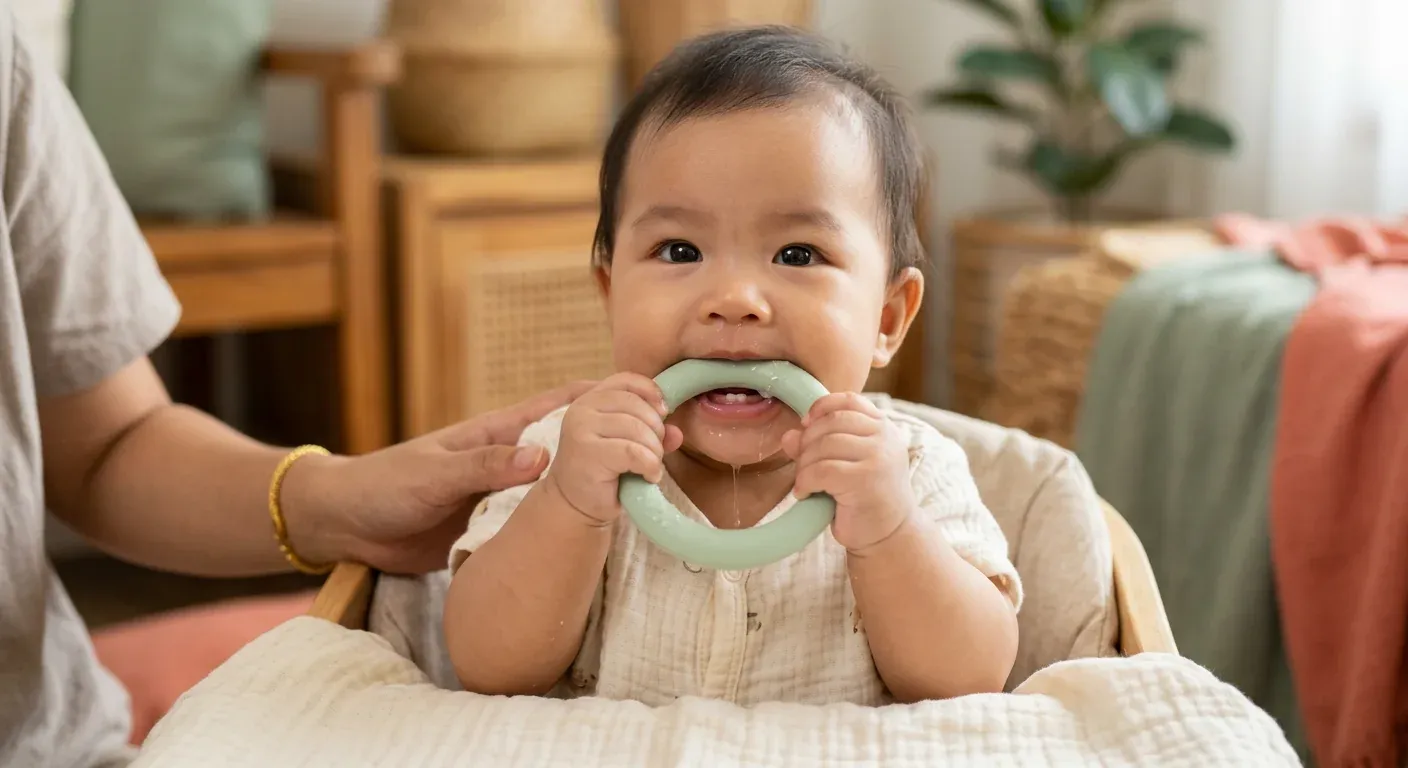
Teething is normal — most babies start at 6–10 months. A clean finger, a solid teether, and a cool cloth are usually enough. AAP is explicit: teething does not cause fever, diarrhea, or unusual crying — those mean illness, not teeth.
Drooling, chewing on everything, fussy, waking more at night — most parents think "teething, right?" Usually yes. There are several safe ways to soothe a teething baby — but there are also several products marketed for "teething pain relief" that the FDA has explicitly warned cause real injury and death in babies.
This article summarises what parents need to know — based on guidance from NHS [1], AAP [2][3], FDA [4][5], and Samitivej Hospital [6].
When Do Primary Teeth Erupt
AAP [2] notes that most babies' first teeth come in between 6 and 10 months, though discomfort can start as early as 3 months. No teeth by the first birthday is still normal — AAP [3]:
"some babies may not have any teeth by their first birthday!"
Samitivej [6] puts the same window: "primary teeth typically emerge between 6–12 months of age."
Order of Eruption
AAP [3]:
"the first teeth to come in are almost always the lower front teeth (the lower central incisors)."
Standard sequence (with normal individual variation):
- Lower central incisors — 6–10 months
- Upper central incisors — 8–12 months
- Lateral incisors — 9–16 months
- First molars — 13–19 months
- Canines — 16–22 months
- Second molars — 23–33 months
All 20 primary teeth are typically in by about age 3.
Real Signs of Teething
AAP [2] identifies three genuine teething signs:
- Drooling (increased saliva)
- Chewing on toys, fingers, even their own toes — NHS [1]: "babies start to chew on their fingers, toys or other objects they get hold of"
- Drool rash around the mouth and chin from skin irritation
May also include:
- Swollen, red gum at the spot where a tooth is breaking through
- Mild fussiness on the day a tooth erupts
- Waking more at night
- Slightly elevated body temperature (under 38°C / 100.4°F)
⚠️ Dangerous Misconception: Symptoms That Are NOT From Teething
This is the most important part of this article — because waiting for "just teething" to pass when it isn't can mean missing an illness that needs treatment.
AAP [2] is explicit. Teething does not cause:
- ❌ Real fever (over 38°C / 100.4°F) — "extensive studies show this is a false symptom of teething"
- ❌ Diarrhea
- ❌ Vomiting
- ❌ Unusually intense or inconsolable crying
- ❌ Bad diaper rash
- ❌ Runny nose, cough
If your baby has any of these — they're sick, not teething. Look for the actual cause (ear infection, viral respiratory infection, gastroenteritis, etc.).
Read more: Infant Fever: When to Worry and When to Go to Hospital
Safe Ways to Soothe
NHS [1] and AAP [2] recommend options that are safe and proven to work:
1. Massage the Gums With a Clean Finger
NHS [1]:
"Comforting or playing with your baby can distract them from any pain in their gums. Gently rubbing their gums with a clean finger may also help."
How: wash your hands, use your index finger to gently rub the spot where a tooth is coming in.
2. A Teething Ring — Solid, No Liquid Inside
NHS [1]:
"Teething rings give your baby something to chew safely. This may ease their discomfort and distract them from any pain."
Safe choices:
- Solid silicone or natural rubber in one piece, no joints
- Some can be chilled in the refrigerator — cool (not frozen) helps reduce gum swelling
⚠️ NHS [1] warns explicitly:
"Never tie a teething ring around your baby's neck, as it may be a choking hazard.""Never put a teething ring in the freezer."
Don't:
- Tie a teething ring around the baby's neck with a cord — risk of strangulation
- Freeze the teething ring rock-solid — damages delicate gums
3. A Cool Cloth
Soak a clean cloth in cooled boiled water, wring it out, chill in the refrigerator (not freezer) for about 15 minutes, then let baby chew.
4. Cold Soft Foods (For Babies 6+ Months Already on Solids)
NHS [1]:
"healthy things to chew on, such as raw fruit and vegetables. Soft fruit like melon can soothe gums."
Options:
- Watermelon, cantaloupe — cold, baby-safe pieces
- Cooked carrot or cucumber that the baby gnaws (always supervised — choking risk)
⚠️ NHS [1] warns: don't use teething rusks — most contain sugar and risk early childhood tooth decay before the full set has even erupted.
5. Pain Relief — When Needed
NHS [1]:
- Paracetamol (acetaminophen) — from 2 months
- Ibuprofen — from 3 months
Specific doses: ask your pharmacist or pediatrician based on baby's weight — don't calculate it yourself from the internet.
What to Avoid — Real Dangers
❌ Teething Gels Containing Benzocaine
FDA [4] issued a warning on 23 May 2018:
OTC oral drug products containing benzocaine "should not be used to treat infants and children younger than 2 years."
Because benzocaine can cause methemoglobinemia — a blood condition where oxygen delivery is severely reduced. It can be fatal. FDA reports more than 400 cases since 1971.
Brand names containing benzocaine (FDA [4]):
- Orajel, Baby Orajel
- Anbesol
- Hurricaine
- Orabase
Methemoglobinemia symptoms: pale, gray, or blue-tinged skin/lips/nail beds, shortness of breath, fatigue, fast heart rate — if you see these signs after using a teething gel, go to hospital immediately.
❌ Teething Gels Containing Lidocaine
AAP [2], citing FDA: lidocaine products "have been linked with heart problems, severe brain injury, seizures and even death."
❌ Amber Teething Necklaces
FDA [5] cites cases of child deaths from these products:
- An 18-month-old died of strangulation by an amber teething necklace during a nap
- A 7-month-old choked on the beads of a wooden teething bracelet under direct parental supervision
The "succinic acid from amber absorbs through the skin to relieve teething pain" claim — FDA [5] has not evaluated it for safety or effectiveness.
AAP [2] states: every variant — amber, wood, marble, or silicone — "pose serious risks for choking and strangulation."
❌ Other AAP Warnings
- Alcohol or alcohol-containing drinks rubbed on gums — risk of poisoning and low blood sugar
- Homeopathic tablets containing belladonna or coffea cruda — recalled by FDA
- Liquid-filled teethers — can leak and expose baby to unsafe substances
- Generic teething gels — NHS [1]: "There's a lack of evidence that teething gels are effective"
When to Start Caring for Teeth
Brush From the Very First Tooth
AAP [3]:
"Once your child has a tooth, you should be brushing them twice a day with a smear of fluoride toothpaste the size of a grain of rice, especially after the last drink or food of the day."
That means:
- Start brushing the moment the first tooth breaks through (don't wait for several teeth)
- Twice a day — morning and before bed
- Fluoride toothpaste — grain-of-rice amount (under age 3)
- Especially after the last meal of the day — prevents decay
After age 3, switch to a pea-sized amount.
First Dental Visit
AAP [3]:
"Try to make your baby's first dental appointment after the eruption of the first tooth and by his or her first birthday."
Samitivej [6] gives the same recommendation in Thailand: "children should visit a dentist when the first primary tooth erupts."
In other words: see a pediatric dentist before baby's first birthday — no need to wait for all the teeth or for them to start talking.
When to Call the Doctor
Most teething doesn't need a doctor — but AAP [2] recommends contacting your pediatrician when:
- High fever (over 38°C / 100.4°F) — teething does not cause real fever
- Diarrhea lasting more than 1 day
- Inconsolable crying that isn't normal for your baby
- After using a teething gel, baby's skin/lips look pale, gray, or blue, breathing is laboured, or baby is lethargic — go to hospital immediately (suspect methemoglobinemia)
- Pus on the gum, or a purple-blue lump on the gum (eruption cyst) that's getting larger
Summary
- First tooth typically comes in at 6–10 months; symptoms can start at 3 months — no teeth by 1 year is still normal.
- Real signs = drooling, chewing, swollen gums, mild fussiness.
- Teething ≠ high fever, diarrhea, vomiting, or intense crying. Those mean illness — find another cause.
- Safe relief = clean-finger gum massage, solid teething ring (never tied to neck), cool cloth, paracetamol per pharmacist guidance.
- Avoid: benzocaine/lidocaine gels · amber teething necklaces · sugary teething rusks · freezing the teething ring · tying anything around baby's neck.
- Start brushing the day the first tooth breaks through — grain-of-rice fluoride toothpaste, twice daily.
- First dental visit after the first tooth erupts and before baby's first birthday.
Teething is hard on babies and parents — but a clean finger and a solid teether are usually enough. The most dangerous step is reaching for a "teething pain relief" product.
แหล่งอ้างอิง
- NHS — Tips for helping your teething baby
- AAP HealthyChildren — Teething Pain
- AAP HealthyChildren — Baby's First Tooth: Facts Parents Should Know
- FDA — Safety Information on Benzocaine-Containing Products
- FDA — FDA warns about safety risks of teething necklaces, bracelets to relieve teething pain or to provide sensory stimulation
- Samitivej Hospital — ฟันน้ำนมซี่แรก…จุดเริ่มต้นสุขภาพช่องปากเจ้าตัวเล็ก