
Songkran Water Festival with Baby: A Family Safety Guide
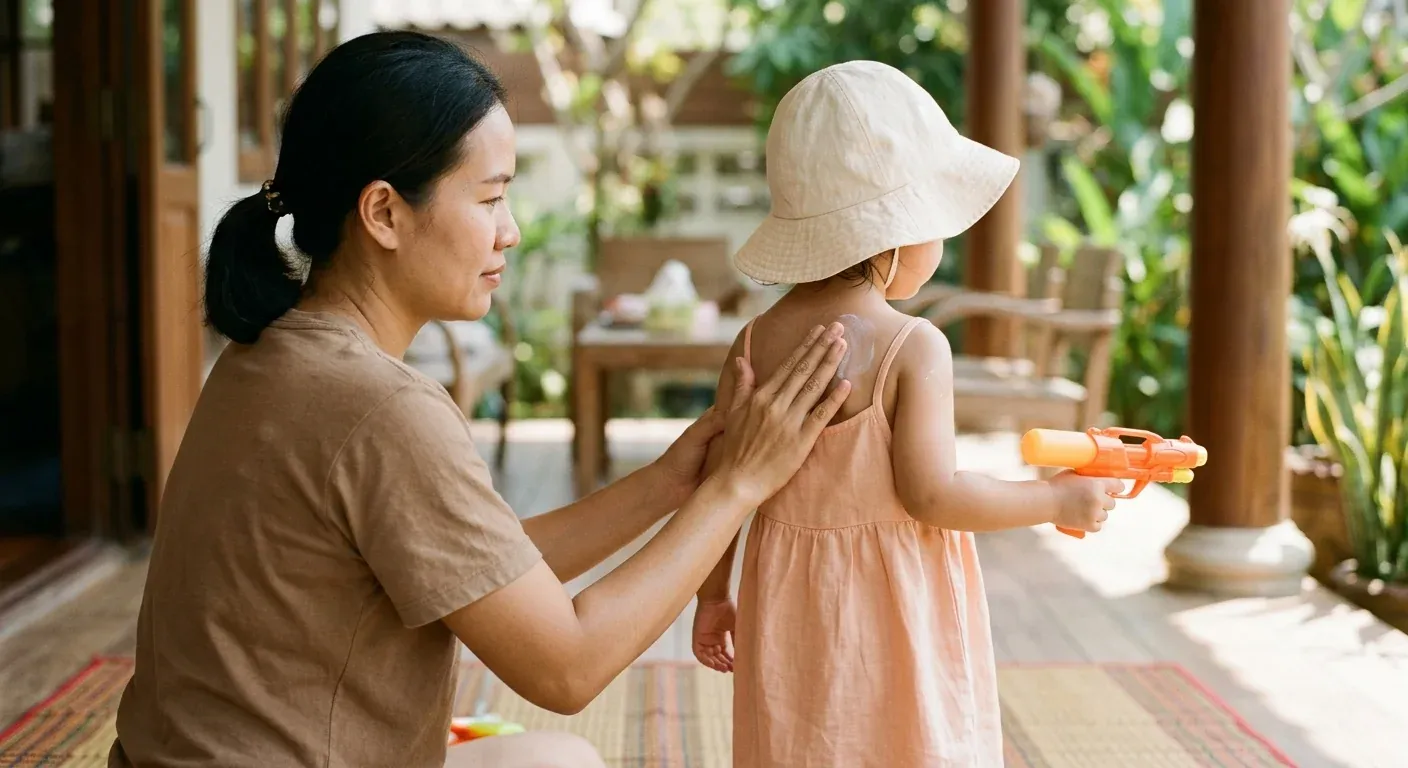
Songkran is for the whole family. A little preparation goes a long way — your child will remember this day for years.
Songkran is Thailand's most beloved festival for children: water, laughter, and streets full of celebration. For families with babies and toddlers, the key to a perfect Songkran is simple preparation. This guide covers what you need to know — from age-by-age readiness to drowning prevention, sun protection, and the warning signs that mean it's time to head home.
When is the Right Age for Songkran Water Play?
Under 6 months — Not ready for outdoor water festivities. The intense April heat (temperatures regularly above 38°C) overwhelms a newborn's limited ability to regulate body temperature. Mineral sunscreen is not recommended at this age either. Better to celebrate at home, indoors, with older relatives visiting.
6–12 months — Babies can begin experiencing the festival atmosphere, but primarily in the shade. Keep direct sun exposure under 15–20 minutes at a time. The adult responsible must maintain arm's-length (touch) supervision at all times [1]. Light splashing is fine; avoid full water-play in direct sun.
1–3 years — The highest-risk window for drowning. According to the AAP, drowning is the number-one cause of unintentional injury death in children aged 1–4 [1]. Toddlers are enthusiastic water players with no sense of depth or danger — this combination demands constant, dedicated adult supervision.
3 years and up — Ready for full Songkran fun, but still need active adult supervision whenever they are near water. Never leave a child this age unattended near any water source, even briefly.
Drowning Prevention: The Rules That Matter
Drowning prevention at Songkran is not an overreaction. The AAP reports that 69% of drowning incidents in children under 4 occur during non-swim time [1] — meaning a child falls into water unexpectedly, not during organised play. The same logic applies to street-side water containers and buckets at Songkran.
5 water-safety principles from the AAP:
- Touch supervision — The responsible adult must be within arm's reach of the child at all times near water. Phone down. No handoff without a clear verbal agreement.
- Empty containers immediately — Buckets, basins, and paddling pools should be emptied as soon as play ends. A bucket left unattended is a hazard.
- Four-sided barriers — If there is a pool at the venue, it must have a four-sided fence at least 1.2 m high with a self-latching gate.
- Designate a water watcher — At family gatherings with multiple children, assign one adult as the dedicated water watcher for 15–30 minute rotations. One person's job. No multitasking.
- Learn infant and child CPR — Knowing CPR gives you critical extra minutes in an emergency. Take a course before the season begins.
Sun and Heat Protection
Thailand's April sun is intense, and young children's bodies regulate heat far less efficiently than adults.
Sunscreen:
- Under 6 months: avoid direct sunlight; use clothing and shade instead of sunscreen.
- 6 months and older: apply SPF 30+ mineral sunscreen (zinc oxide or titanium dioxide base) to all exposed skin at least 15 minutes before sun exposure. Reapply every 2 hours and after water play.
- Avoid sunscreens containing oxybenzone in young children. If unsure, ask a pharmacist.
Clothing:
- Light-coloured, loose-fitting, breathable cotton.
- Wide-brimmed hat to protect face, ears, and neck.
- For extended water play, consider a UPF-rated swim shirt.
Hydration:
- Actively offer water throughout the day — don't wait until your child asks.
- For exclusively breastfed infants: breast milk provides adequate hydration in normal conditions; nurse more frequently in extreme heat.
- For older children: plain water or fresh coconut water over sugary drinks.
Common Songkran Illnesses and How to Prevent Them
The CDC notes that contact with contaminated water — whether swallowed, inhaled, or absorbed through the skin — is the source of several illnesses common during water play [2]. During Songkran, where water passes through many hands before reaching your child, these risks are heightened.
Conjunctivitis (pink eye) The most common Songkran-related illness in children. Street water at Songkran carries bacteria and viruses that can infect eyes on contact. Symptoms: red eyes, itching, discharge, tearing. The Department of Disease Control recommends avoiding direct water-spray to children's eyes and washing hands before touching the face [4].
Swimmer's ear (otitis externa) Water trapped in the ear canal allows bacteria or fungi to grow, causing pain, itching, and muffled hearing. The CDC identifies swimmer's ear as one of the most common illnesses associated with water play [2]. After any water exposure, tilt the head to each side to let water drain out, then gently dry the outer ear with a clean cloth — do not insert anything into the ear canal.
Heat rash (miliaria) Hot, humid conditions block sweat ducts, producing a rash of small red bumps, especially in skin folds (neck, armpits, elbow creases). Prevent it by keeping children in breathable clothing and bringing them into shade or air conditioning regularly. The Department of Health's guidance on heat-related skin conditions applies here [3].
Diarrhoea Water at Songkran street festivities can carry gastrointestinal pathogens. Teach children not to swallow the water, and wash hands thoroughly before eating or drinking.
What to Pack for a Safe Songkran Day Out
A well-packed bag removes the stress and keeps the fun going:
- SPF 30+ mineral sunscreen (for children 6 months and older)
- Wide-brimmed hat and child-safe sunglasses
- At least 2 changes of clothes and a towel
- More water than you think you need — plain water only
- Eye rinse / saline eye drops for immediate eye flushing if needed (ask your pharmacist)
- Insect repellent for shade/evening settings
- Nappies and wet wipes for infants
Red Flags: When to Stop and Seek Help
Watch for these warning signs and remove your child from activities immediately:
- Very hot skin with no sweating or flushed face — possible heatstroke; move to shade immediately
- Unusual drowsiness, listlessness, or weakness
- Shivering or shaking after prolonged water exposure — possible hypothermia
- Red, itchy, or painful eyes after water contact
- Ear pain, muffled hearing, or fluid from the ear
- Severe diarrhoea or vomiting following water play
If any of these signs appear, seek medical care promptly. The Royal Thai College of Pediatricians emphasises not underestimating unusual symptoms in young children [5].
Summary: A Songkran Your Family Will Remember Happily
Songkran is a rare opportunity for families to experience Thai culture at its most joyful, and children absorb that joy with their whole bodies. Good preparation doesn't reduce the fun — it removes the anxiety that can creep in when you're not sure what to watch for.
Keep these five principles in mind:
- Stay within arm's reach whenever your child is near water.
- Protect from the sun — sunscreen, hat, and shade rotation.
- Offer water frequently — don't wait for thirst.
- Take shade breaks every 30–40 minutes.
- Know the warning signs and be ready to step away from the celebration if needed.
The best Songkran is the one where everyone comes home happy.
แหล่งอ้างอิง
- AAP HealthyChildren — Water Safety and Young Children (drowning prevention, touch supervision)
- CDC — Healthy Swimming: Illness and Injury Prevention in and around Water
- กรมอนามัย — สุขภาพแม่และเด็ก (Department of Health, maternal and child health)
- กรมควบคุมโรค — การป้องกันโรคในช่วงเทศกาลสงกรานต์ (DoCD, communicable disease prevention during Songkran)
- ราชวิทยาลัยกุมารแพทย์แห่งประเทศไทย — สุขภาพเด็ก (Royal Thai College of Pediatricians)