
How to Choose a Stroller: A Complete Guide for Families in Thailand
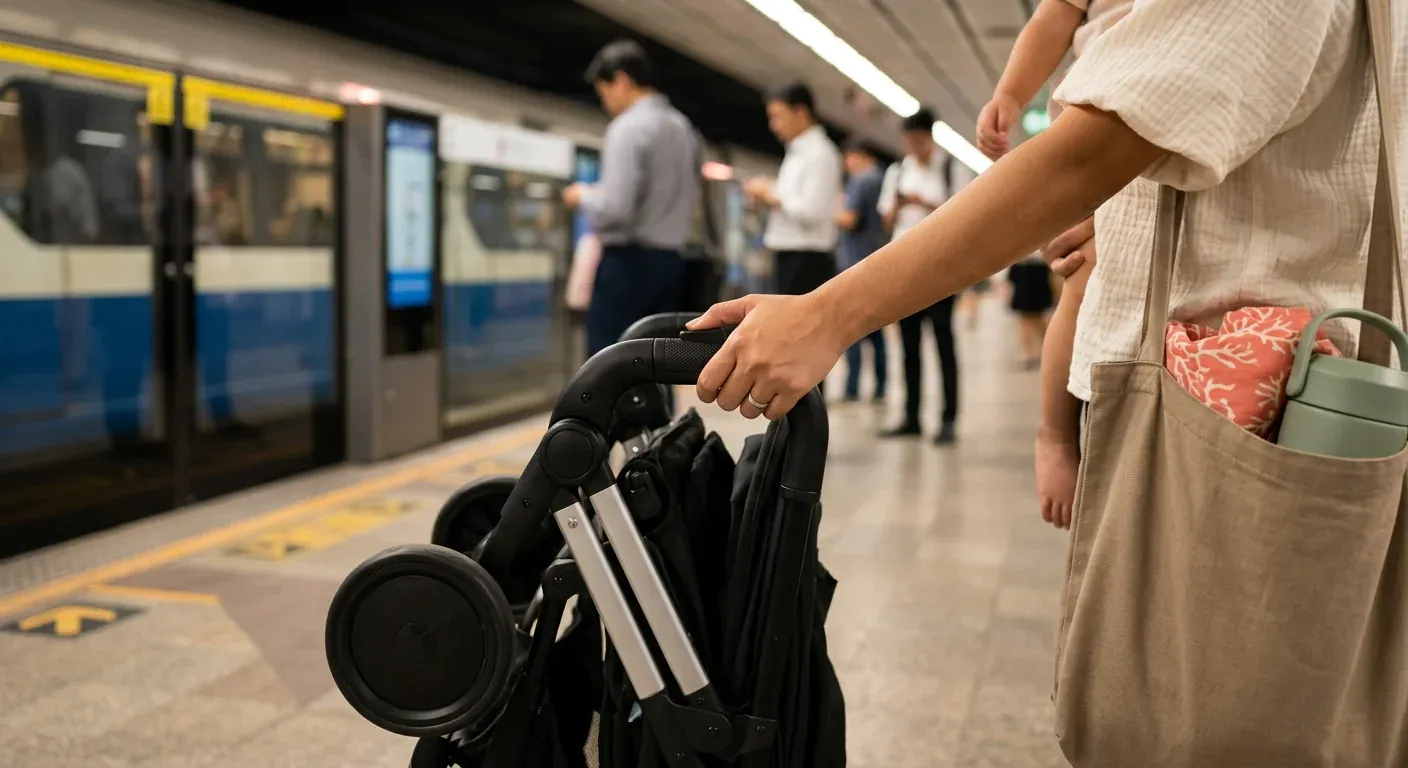
The best stroller is the one you'll actually use every day — not the most expensive one.
The stroller market offers hundreds of models, a wide range of prices, and more brand names than any parent has time to research. This guide won't tell you which model is "the best" — that answer depends entirely on your family's lifestyle. Instead, it will help you understand what to look for before making a decision.
What's covered: stroller types · international safety standards · features that matter in Thailand · Thai-specific context (MRT gates, condo storage, monsoon season, uneven footpaths) · a printable pre-purchase checklist.
1. Which Type of Stroller Fits Your Life?
Strollers are not one-size-fits-all. Each category is engineered for a different lifestyle.
Travel System
An infant car seat paired with a compatible stroller frame [3]. Designed for the first six months when car travel is frequent — the car seat clicks straight onto the frame, so a sleeping newborn can be transferred from car to stroller without waking.
Good for: Car-primary families; parents who want a single system that handles newborns and car trips.
Limitations: Heavier and bulkier than other types; the infant-only car seat portion is outgrown within 6–12 months.
Full-Size Traditional Stroller
Larger frame, plush seat, full-recline capability, oversized storage basket. Built for the "home to mall" routine.
Good for: Frequent mall trips; families with a large car; parents who need maximum basket capacity.
Limitations: Often exceeds 10 kg — difficult to carry up stairs or lift into a vehicle; folds large, challenging in condo storage.
Lightweight / Compact Stroller
Typically 4–7 kg, compact fold. The most common choice for city-dwelling families in Thailand.
Good for: Daily use on BTS/MRT; condo living; anyone who regularly lifts the stroller.
Limitations: Smaller storage basket; some models don't recline flat enough for newborns.
Umbrella Stroller
The simplest design — folds vertically like an umbrella. Very light, usually inexpensive. Not suitable for newborns who cannot yet support their own head and torso.
Good for: Travel backup; older babies and toddlers who alternate between walking and riding.
Jogging Stroller
Large wheels, suspension system, designed for running parents.
Thailand reality check: Bangkok footpaths and most Thai city streets are uneven — mid-to-large wheels on a regular lightweight stroller handle everyday terrain adequately. A true jogging stroller is most useful at parks with proper running paths.
Twin / Tandem Stroller
For twins or children close in age. Available in side-by-side and front-back (tandem) configurations.
Key check: Side-by-side models may not fit through MRT gates (typically ~60 cm wide) — measure before buying.
Cabin-Friendly Travel Stroller
Compact enough to fit in an airplane overhead bin when folded. Always confirm with the airline before each flight — overhead bin dimensions vary by aircraft type.
2. Safety Standards — Non-Negotiable Before Any Purchase
Safety is the baseline, not a bonus feature. The AAP recommends checking all of the following before putting any child in a stroller [1]:
5-Point Harness — Required, No Exceptions
The harness must include shoulder straps (2), waist straps (2), and a crotch strap (1). Use it on every ride [1]. It prevents a child from sliding out if the stroller tips or jolts. Some strollers offer only a 3-point harness — always choose 5-point.
Brakes
Brakes must be easy to operate — engage and release without bending far down. Models that lock two wheels simultaneously provide better security than single-wheel brakes [1]. Check that a child in the stroller cannot reach the release lever.
Base Width and Stability
A wide base significantly reduces tip-over risk [1]. Never hang bags from the handles — the added weight behind the rear axle shifts the center of gravity and causes backward tipping.
Fold Mechanism — Finger Safety
Hinges and fold joints are a pinch hazard [1]. Rule: always lock the stroller fully open before placing your child inside, and keep children away from the stroller while folding or unfolding.
Safety Certification Standards
For the Thai market, look for:
- ASTM F833 (mandatory US standard; relevant for US imports) [2]
- EN 1888 (European standard; relevant for European imports)
- These standards cover braking, stability, restraint systems, impact testing, and entrapment prevention
- Strollers with no stated certification standard warrant extra scrutiny
Newborns — Special Requirements
Babies 0–6 months cannot independently support their head and neck [5]. Any stroller used with a newborn must have:
- Full flat recline or a separate carrycot (horizontal sleeping module)
- A newborn insert to support the head
- A 5-point harness adjusted to fit a small body
Do not: Place a newborn in an upright stroller seat before they can sit independently.
3. Features That Matter in Thailand
Heat and Sun — The Thai Priority
Thailand's year-round heat and intense UV radiation make sun protection more critical than most foreign review sites acknowledge [4]:
- Extendable canopy with UPF 50+ — meaningful UV protection for infant skin
- Mesh ventilation panels at the back or sides — reduces seat temperature substantially
- Light-coloured fabrics reflect heat better than dark ones
- Watch for: canopies that block sun completely but trap heat — ventilation and shade must work together
Monsoon Season (April–October)
Rain arrives fast and heavy during Thailand's monsoon months. A stroller that includes a rain cover — or accepts one as an add-on — is genuinely useful, not a luxury. If purchasing a rain cover separately, verify compatibility with your specific model before buying.
Humidity and Materials
High year-round humidity can cause untreated fabrics to develop mold over time. Mold-resistant fabrics or easily machine-washable seat pads are worth the premium for long-term use.
MRT and BTS Rail Access
For Bangkok families who rely on rail transit:
- Folded width: MRT gates are typically ~60 cm wide — confirm the stroller clears when folded
- One-handed fold: essential when carrying a baby simultaneously
- Weight: every kilogram matters on stairs and escalators
Condo and Apartment Living
- Self-standing folded: strollers that stand on their own when folded save floor space in compact condos
- Elevator dimensions: measure your building's elevator against the stroller's folded dimensions
- For walk-up buildings: under 7 kg is the practical threshold for daily carrying
Footpaths and Street Surfaces
Bangkok footpaths — and most Thai city sidewalks — are uneven: cracked tiles, sudden kerb drops, occasional stretches with no footpath at all:
- Wheels 8 inches or larger handle irregular surfaces better than 5–6-inch wheels
- Foam-filled wheels avoid punctures; adequate for typical urban terrain
- Air-filled (pneumatic) wheels give a smoother ride on rough ground but can puncture
Shopping Malls
Most Thai malls are well set up for strollers. A generous under-seat storage basket is genuinely useful for carrying shopping alongside a baby bag.
4. Features to Evaluate at the Shop
Things to Always Test In-Person
Fold mechanism
- Can you fold it one-handed (while "holding a baby" — simulate this)?
- Does it self-stand when folded?
- Does it auto-lock open when unfolded?
Real weight
- Lift it with both hands, then one hand
- Imagine carrying it up a flight of stairs while also carrying a child — is it manageable?
- Under 8 kg is ideal for daily use; under 12 kg is acceptable for full-size models
Seat direction
- Parent-facing for younger infants who need eye contact
- World-facing for older babies exploring their environment
- Reversible seats: check the mechanism is secure in both positions
Recline angles
- Full flat for infants
- Multiple positions for sleep vs. sitting
Storage basket capacity
- Simulate: diaper bag + small shopping bag — does it fit?
- Can you access the basket when a child's weight is in the seat?
Harness system
- Can you clip and unclip the 5-point harness with one hand while a child is wriggling?
- Does the harness adjust easily across size ranges?
Brakes
- Single-foot lock and release preferred
- Some models require pressing two separate levers — test before buying
Handlebar height
- Adjustable for both tall and shorter caregivers?
- If grandparents will also use the stroller, test with them present
5. Matching Stroller Type to Thai Family Life
Car-Primary Families
A travel system or full-size stroller with a large basket is a natural fit. Weight is less of a concern when the car absorbs most of the transport work.
BTS/MRT-Primary Families
Light weight, one-handed fold, and a footprint that fits through rail gates are non-negotiable requirements. A lightweight compact or dedicated travel stroller is the practical choice.
Frequent Flyers
A cabin-friendly model designed to fit in overhead bins — but verify dimensions with the airline before every flight. Low-cost carriers and smaller regional aircraft have narrower bins.
Condo Living, No Lift
Weight under 7 kg is the threshold that makes a real difference in daily life. Compact fold dimensions matter as much as stroller weight.
Planning More Children
Consider a stroller with a sibling board attachment option, or plan ahead for a tandem configuration from the start.
Grandparents as Primary Caregivers
Many Thai families rely on grandparents for daily care. Choose a model with brakes that older adults can operate comfortably, a fold that doesn't require strength to execute, and a weight they can realistically manage. Test with every person who will regularly use the stroller.
6. Thai Cultural Context Worth Knowing
Brand Visibility and Social Pressure
Premium strollers from internationally recognised brands are visible status signals in Bangkok's upscale shopping malls. There's nothing wrong with choosing a brand you like — but the grounding principle is:
A well-chosen mid-range stroller matched to your actual lifestyle will outperform a premium stroller chosen for the wrong use case.
Price tier reference (descriptive, not specific numbers):
- Budget tier (house-brand or local): functional, typically 1–2 year lifespan
- Mid-range (international brands — Combi, Joie, Maxi-Cosi, entry-level Cybex): 3–5 year lifespan, stronger feature set
- Premium (Bugaboo, Stokke, Babyzen, Uppababy, top-tier Cybex): 5+ year lifespan, strong resale value, multi-child use
- Luxury / limited editions: often status value more than functional premium
Decision framework: Think in terms of (years of use) × (frequency of use), not sticker price.
The Hand-Me-Down Tradition
Thai families commonly pass strollers between siblings, cousins, and friends — practical and sustainable. Before accepting or using a pre-owned stroller:
- Check the model against the CPSC recall database at cpsc.gov [2]
- Strollers manufactured before 2017 may not meet current safety standards
- Inspect for damage: loose joints, frayed harness straps, brake failure — retire immediately if any of these are found
Baby Carrier and Stroller Together
Thai cultural settings sometimes call for holding a baby close — for formal greetings or ceremonies where free hands matter. Strollers work best for extended walking, shopping, and nap time. Many families find having both a carrier and a stroller gives the most flexibility across situations.
7. Choosing by Your Child's Stage
0–6 Months — Highest Safety Requirements
Babies this age cannot yet support their head or torso independently [5]. Essential:
- Full flat recline or carrycot
- Newborn insert for head support
- 5-point harness adjusted small
- Well-ventilated seat
Travel system is ideal for this stage if car travel is frequent [3] — moves a sleeping newborn from car to stroller without waking.
6–12 Months — Can Sit with Support
Back support still matters; partial recline is useful for naps. Sun protection remains critical.
12–24 Months — The Toddler Stage
Children this age want to walk — frequently. The stroller becomes a rest station more than a primary vehicle. A lightweight or umbrella stroller is more practical than a full-size at this stage.
2–4 Years — Occasional Use
Stroller for long outings and when the child is tired. Choose the lightest model that still meets the weight capacity for your child and passes its safety certification.
Practical approach: You don't need to buy every stroller category from day one. One well-matched stroller covering 0–2 years beats three strollers that don't fit real life.
8. Pre-Purchase Checklist — Print and Bring to the Shop
Before leaving home — answer these:
- How will I primarily use this stroller? (Car / rail transit / mall / walking)
- How old is my child right now? (Newborn / 6 months+ / toddler)
- Maximum weight I can realistically carry daily?
- Storage space at home — what are the dimensions? What's my lift size?
- Which budget tier am I comfortable with?
- Does the brand have an authorised service centre in Thailand?
- Do I plan to have more children? (May influence sibling board or tandem needs)
- Who else will use the stroller? (Grandparents — bring them to test too)
At the shop — test everything:
- Fold and unfold 3 times (including one-handed while holding a bag)
- Lift one-handed — manageable?
- Sit a demonstration weight in the seat — support feels adequate?
- Engage and release the brake with one foot
- Load the storage basket with a large diaper bag — fits and accessible?
- Buckle and unbuckle the 5-point harness
- Adjust the handlebar to every caregiver's height
- Measure the folded dimensions against your home storage and lift
Summary
The right stroller is the one that matches your real life — where you go, how you travel, who else uses it, and how long your child will need it.
Return to the core question: where will you use it most — car, rail, mall, or walking? That single answer eliminates more than half the options. From there: confirm safety certification, test in person, and choose the model that every caregiver in your household can operate comfortably.
A stroller that meets AAP standards [1], has a secure 5-point harness, reliable brakes, and genuinely fits your life in Thailand — that is the right stroller for your child.
แหล่งอ้างอิง
- AAP HealthyChildren — How to Buy a Safe Stroller. Covers 5-point harness (shoulder/hip/leg straps, required every ride), easy-to-operate brakes (dual-wheel lock preferred), wide base to prevent tipping, hinge safety (lock open before placing child), no bags on handles (backward tip hazard), never leave child unattended.
- US CPSC — Carriages and Strollers Business Guidance. Mandatory standard ASTM F833 (16 CFR Part 1227) covers stroller safety including parking brake, stability testing, restraining systems, impact testing, and head entrapment prevention. CPSC recall database searchable at cpsc.gov.
- AAP HealthyChildren — Car Safety Seats: Information for Families. All infants rear-facing from first ride home; convertible and all-in-one seat types described; harness snug with chest clip at armpit level. Relevant for travel-system (car seat + stroller frame) context.
- กรมอนามัย กระทรวงสาธารณสุข — Thailand Department of Health, Ministry of Public Health.
- ราชวิทยาลัยกุมารแพทย์แห่งประเทศไทย — Royal Thai College of Pediatricians.