
Sibling Rivalry: A Normal Part of Growing Up (And What Parents Can Actually Do)
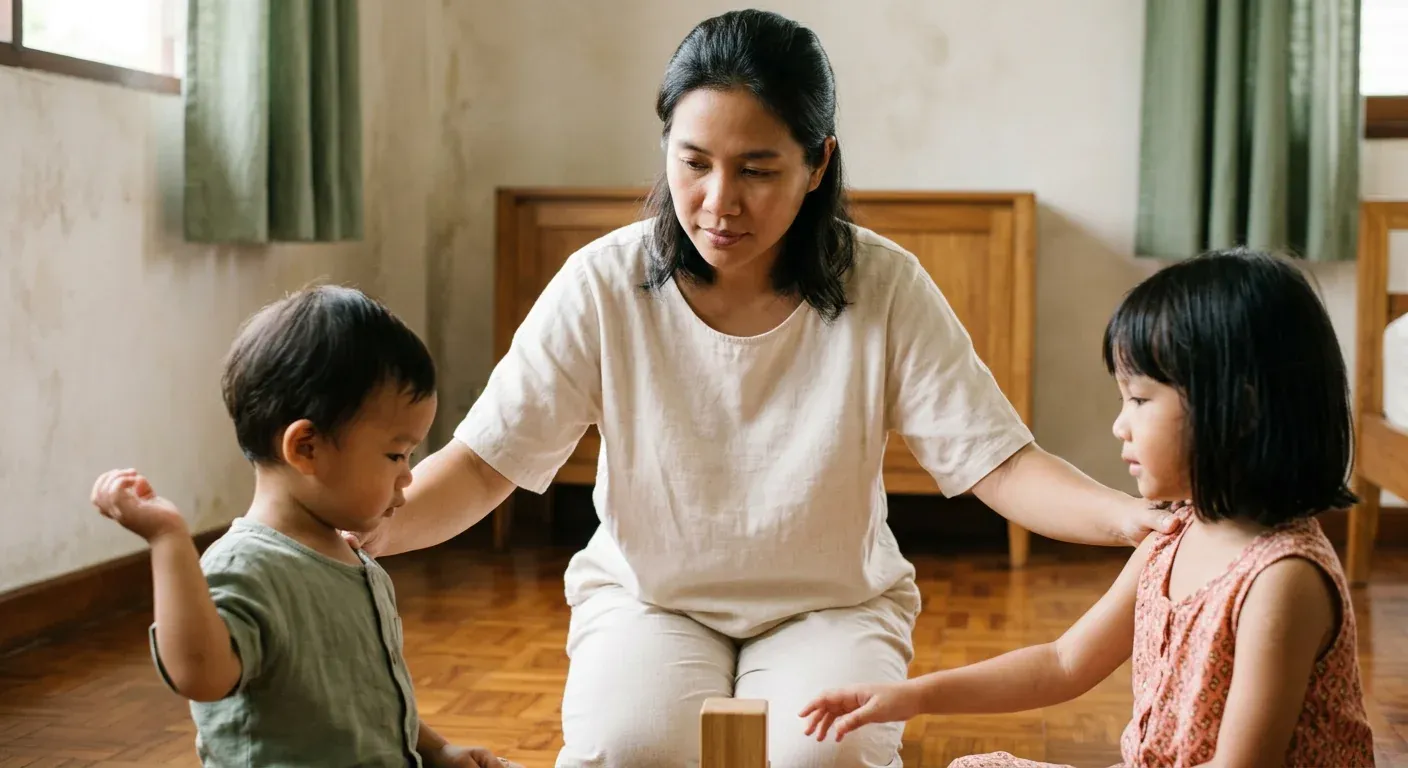
Sibling fights are not a parenting failure. They are the first classroom where children practise the skills they will use for life.
A 3-year-old snatches a toy from a younger sibling. A 5-year-old insists that you love the baby more. Every family with more than one child knows these moments — and most parents wonder whether they are doing something wrong.
The reassuring truth is that sibling conflict is developmentally normal and, handled well, genuinely useful. According to the American Academy of Pediatrics (AAP), siblings are "each other's first peers" [1] — the training ground where children learn to disagree respectfully, negotiate, compromise, and repair relationships. These are skills they will carry into friendships, classrooms, and workplaces for the rest of their lives.
Why Siblings Fight
Sibling conflict usually flows from three roots:
1. Competition for parental attention
Every child needs to feel seen and loved by their parents. When a new baby arrives — or when a parent is absorbed with one child for any reason — the other may feel displaced. That feeling often surfaces as provocation, interference, or behaviour that seems designed to draw attention, even negative attention.
2. Developmental mismatch
A 2-year-old and a 5-year-old inhabit completely different cognitive and emotional worlds. The toddler grabs, hits, or screams because impulse control is not yet wired. The older child reads deliberate aggression where there is only immature regulation. The frustration is real for both; the intentions are often misread.
3. Competition for limited resources
Toys, space, screen time, the favourite chair at dinner — in children's eyes, these are genuinely scarce. Learning to share and wait for a turn is a skill that takes years to develop, not a switch that flips on its own.
What Counts as Normal
The AAP is clear that "learning to disagree respectfully is part of developing effective communication and building coping skills" [1]. These patterns are within the normal range:
- Arguing over toys and crying or shouting when things don't go their way
- Complaining that a parent is unfair or plays favourites
- Mild name-calling ("You're so dumb!")
- Pushing or hitting in young children who cannot yet manage impulses
What matters more than the frequency of conflict is what children learn from it. Parents who help children name feelings and find solutions together are building something more durable than a quiet house.
When to Step In
The AAP recommends a graduated approach [2]: start by allowing children to work things out, and increase involvement based on what you observe.
Let them work it out when:
- Both children are physically safe
- They are still talking or negotiating — not yet at breaking point
- Neither is frightened or overwhelmed
Step in immediately when:
- There is hitting, pushing, or physical harm
- One child is genuinely frightened or in pain
- They cannot reach any resolution after a genuine attempt
- One child is using language to demean or threaten repeatedly
When you do intervene, the key principle from the AAP [1] is: do your best to listen fairly before deciding. Even if you already know who started it, taking time to hear both sides models the respectful conflict resolution you want to teach.
5 Strategies That Actually Work
1. Set clear household rules — together
Good rules are simple, memorable, and applied consistently:
- "In our house, we don't hit."
- "If you want something, you ask first."
- "When you're angry, use words, not hands."
State these proactively — not only when things go wrong.
2. Give each child one-on-one time
Much sibling conflict is, underneath, competition for parental attention. Brief one-on-one time with each child — even 10–15 minutes a day, a bedtime chat, or a short errand together — signals that each child has a place that is entirely theirs. That sense of security reduces the drive to compete [2].
3. Use positive reinforcement, not just correction
Catching children doing well is more powerful than catching them doing wrong. When a child shares without being asked, when an older sibling helps a younger one, when a child uses words instead of grabbing — name it specifically: "I really noticed how you waited for your sister to finish." Specific praise teaches children what the target behaviour actually looks like.
4. Teach emotional regulation, not just behaviour stopping
When a child is in the grip of anger, what they need first is co-regulation — a calm, close adult presence that helps them return to a state where they can think. The time-in approach: sit near the upset child without lecturing, acknowledge the feeling ("I can see you're really angry that she took your toy"), and wait for the nervous system to settle before problem-solving. Punishment before calm rarely sticks.
5. Model what you want to see
The AAP puts it directly: "how our kids interact begins with how we as parents interact with our families" [1]. When parents disagree calmly, listen before reacting, and apologise when they get things wrong, children absorb those patterns without being explicitly taught them.
Family Habits That Build Sibling Bonds
Beyond conflict management, the AAP [2] recommends regular habits that strengthen sibling relationships over time:
- Screen-free family meals — casual conversation builds connection and problem-solving in a low-stakes setting
- Cooperative games rather than purely competitive ones (puzzles, building projects, team-based board games)
- Taking turns choosing activities — so each child's preferences feel genuinely valued
- Simple shared tasks — cooking together, gardening, building something — that create pride in a shared outcome
Warning Signs to Discuss with a Professional
Most sibling conflict is within the range of normal. Speak with your paediatrician or a child psychologist if you notice:
- Repeated physical harm that continues despite consistent parental intervention
- One child showing genuine fear of the other — actively avoiding being in the same room
- Aggression spreading outside the home: hurting peers, teachers, or animals
- Signs of anxiety, depression, or school refusal in either child
- Conflict that never de-escalates, despite trying multiple approaches over weeks
Thailand's Department of Mental Health [4] operates a free 24-hour mental health helpline at 1323 for parents who need additional support.
Summary
Sibling rivalry is not a problem to be eliminated — it is an opportunity. According to the AAP [1], siblings are each other's first peers, and every conflict they navigate together is practice for the relational challenges ahead.
Five principles to keep in mind:
- Set clear, consistent household rules
- Give each child dedicated one-on-one time
- Use positive reinforcement to name good behaviour
- Teach emotional regulation first, discipline second
- Model the conflict resolution you want children to learn
If the situation feels beyond your ability to manage, asking for professional help is not a failure — it is parenting well.
แหล่งอ้างอิง
- AAP HealthyChildren — Sibling Synergy: How to Help Your Kids Build Healthy Bonds
- AAP HealthyChildren — Sibling Synergy: Family Activities and Conflict Guidance
- CDC — Child Development: Positive Parenting
- Department of Mental Health, Thailand — Mental Health Hotline 1323
- Department of Health, Thailand — Child Health Promotion