
RSV in Babies: The Cold That Can Send a Newborn to ICU
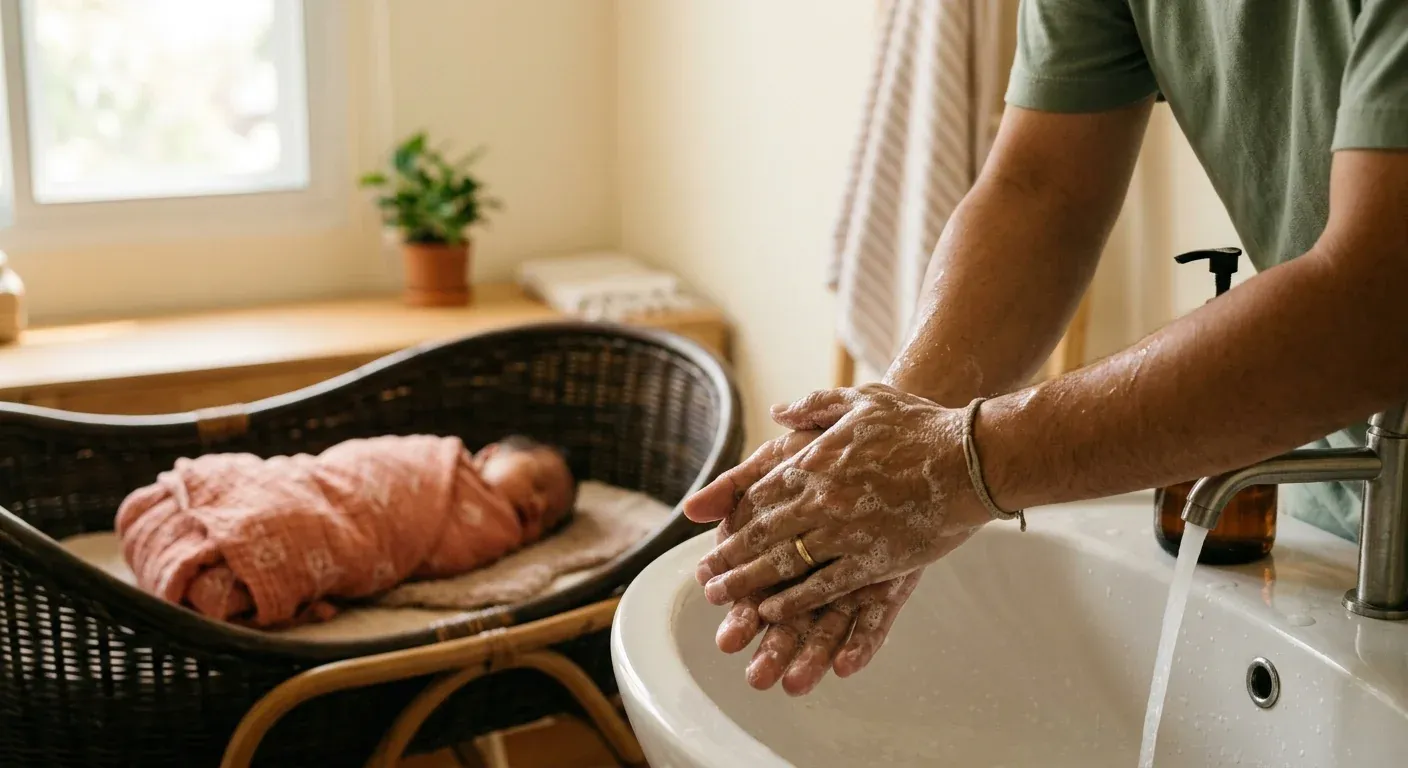
RSV starts as a cold. In a young baby, it can end in ICU. The skill that protects your baby is watching the chest, not the thermometer — and washing hands before every cuddle.
RSV (respiratory syncytial virus) is the single biggest cause of infant hospitalisation worldwide [1]. Almost every child gets it by age 2 [2]. For most, it's a bad cold. For young infants — especially under 3 months, preemies, or babies with heart or lung conditions — the same virus can cause severe bronchiolitis, low oxygen, and ICU admission.
This guide draws on AAP HealthyChildren [2], CDC [3][4], NHS [5], WHO [1], and NICE [6]. It is written for a Thai parent watching a coughing baby in the cool-season window (November–February), with a dedicated section on nirsevimab availability in Thailand. It is not a diagnosis — when in doubt, call your paediatrician or 1669.
What RSV actually is — and why "just a cold" is misleading
RSV is a respiratory virus that spreads in droplets and on hands and surfaces. Incubation is 4–6 days. Roughly 80%+ of children are infected by age 2 [2] — reinfection happens throughout life but is usually milder once the immune system has met it before.
The confusing part is the opening. RSV starts exactly like a cold: runny nose, congestion, low-grade fever, fussiness, mild cough. The Thai word หวัด covers both, and AAP HealthyChildren is explicit — early RSV symptoms are "cough, congestion, runny nose, sneezing, fever" [2], the same list as the common cold.
The difference shows up on days 3–5, when RSV can drop into the small airways of the lungs (the bronchioles) and cause bronchiolitis — the chest infection NHS describes as starting "similar to a cold" before progressing to "breathing more quickly" and "noisy breathing (wheezing or crackling sounds)" [5].
So the framing parents need is not "is it a cold or RSV?" — early on, you usually can't tell. It's "is the breathing changing?" That is the question the next section answers.
Red flags — what to actually watch on the chest
In a baby under 12 months in cool season, the thing that decides whether a cough is mild RSV or severe RSV is the work of breathing. AAP HealthyChildren lists these as the markers of severe disease [2]:
- Fast breathing (see rate table below)
- Flaring of the nostrils with each breath
- Head bobbing with breathing
- Rhythmic grunting during breathing
- Belly breathing, tugging between the ribs and/or the lower neck (retractions)
- Wheezing
And the emergency signs — AAP says call the paediatrician immediately [2], NHS escalates to 999 [5]:
- Pauses or difficulty breathing (apnea — especially under 2 months, where it can be the first sign of RSV)
- Pale, grey, or blue-coloured skin, lips, or nail beds (cyanosis)
- Significantly less activity and alertness ("floppy and will not wake up or stay awake")
- Fever in a baby under 3 months — any temperature ≥ 38°C is a same-day evaluation regardless of cause [5]
Normal vs concerning breathing rate
Count for a full minute while the baby is calm (asleep is best). One full chest rise + fall = one breath.
| Age | Normal (breaths/min) | Concerning (call doctor) |
|---|---|---|
| 0–2 months | 30–60 | > 60 |
| 2–12 months | 25–40 | > 50 |
| 1–5 years | 20–30 | > 40 |
Retractions are the most useful sign for non-clinicians to learn. Strip the baby's chest and watch from the side: if the skin sucks inward between the ribs, under the rib margin, or above the collarbones with each breath, that means the diaphragm is doing more work than it should — the baby is fighting for air. Day-or-night, this earns a call.
Who is at highest risk
Most healthy term babies who get RSV ride it out at home. The babies who are most likely to deteriorate fast — the group every Tier-1 source flags — are:
- Infants under 6 months, especially under 3 months
- Premature babies, especially born under 29 weeks
- Chronic lung disease of prematurity (BPD)
- Hemodynamically significant congenital heart disease
- Severe immunodeficiency
- Neuromuscular conditions that affect airway clearance
- Down syndrome
NHS adds, more practically: "under 6 months old, born prematurely, weakened immune system, or long-term lung or heart conditions" [5]. If your baby is in any of these groups, the threshold for calling the paediatrician should be lower than for a healthy older sibling — and the prevention conversation in the next section is for you first.
Prevention — and the 2024+ paradigm shift
Until recently, palivizumab (Synagis) was the only prophylaxis, and only for high-risk infants — monthly injections through RSV season. As of 2023–2024, two new options have changed the picture for all babies, not just high-risk:
Nirsevimab (Beyfortus) — for the baby, after birth
Nirsevimab is a long-acting monoclonal antibody — passive immunisation, not a traditional vaccine. CDC describes it as providing "immediate protection against RSV" lasting "at least 5 months" with a single intramuscular dose [4]. It is recommended for:
- All babies under 8 months entering their first RSV season, if the mother did not receive a maternal RSV vaccine [4]
- A small group of high-risk children 8–19 months entering their second RSV season
AAP HealthyChildren reports that a single nirsevimab injection is "80–90% effective in preventing infants from being hospitalized with RSV" [2]. Timing: CDC recommends giving it "shortly before the RSV season, or within 1 week after birth if born during" the season [4] — which, for Thailand, means September–October before the November peak, or in the maternity ward for babies born November–February.
Maternal RSV vaccine (Abrysvo) — for the mother, during pregnancy
The alternative is a one-dose maternal vaccine given in pregnancy. CDC recommends Abrysvo "during weeks 32–36 of pregnancy," which lets the mother pass antibodies to the baby through the placenta; protection lasts "approximately 6 months after birth" [4]. AAP HealthyChildren reports it "reduces hospitalization risk by 57% in the baby's first 6 months after birth" [2].
You generally pick one or the other, not both — the choice depends on whether the baby is already born, the season timing, and what your obstetrician or paediatrician has access to.
Palivizumab (Synagis) — still used for some high-risk infants
The older monthly-injection option remains relevant for some preterm and congenital-heart-disease infants where nirsevimab is not available or not appropriate. Your paediatrician decides this case by case.
Non-pharmacological prevention — what every household can do
The unglamorous interventions matter the most for a baby too young for nirsevimab to have taken effect (or in a family that hasn't accessed it):
- Hand-washing every time before picking up the baby — by parents, grandparents, siblings, visitors
- No kissing the baby's face by anyone with cold symptoms
- No visitors with a runny nose, cough, or fever — especially for infants under 3 months
- Limit crowded indoor spaces for under-6-month-olds during peak season
- Breastfeeding provides some passive antibody protection [1]
- Smoke-free home — second-hand smoke worsens RSV severity
- Day-care timing — if return-to-work timing allows, delaying day-care entry past 6 months reduces severe-RSV risk
Nirsevimab in Thailand — what's actually available
This section is where global guidance has to meet Thai reality, and the situation is evolving, so the framing matters.
Where you can get it. Nirsevimab is available in Thailand through the major private paediatric hospitals — Bumrungrad confirms it on their RSV information page as part of their preventive options, with paediatrician consultation determining dosing by weight. Samitivej, Bangkok Hospital, Phyathai, Praram9, BNH, and MedPark have similar private pathways. Talk to your paediatrician directly — availability moves faster than hospital websites update.
Cost framing. Nirsevimab is out-of-pocket in the private sector for most families. The cost is significant — premium-bracket, comparable to other one-dose paediatric biologics. We deliberately do not quote a specific number here because pricing varies by hospital, weight-based dose, and import lot, and an article that quotes "X baht" ages badly within a single season.
NHSO / public-system coverage. As of the 2026 budget year, routine NHSO universal coverage for nirsevimab for all infants has not yet been announced. Some high-risk paediatric protocols at academic hospitals (Siriraj, Ramathibodi, Chulalongkorn) may use it case-by-case for the highest-risk preterm or congenital-heart-disease infants. Verify current eligibility with your paediatrician or the NHSO 1330 hotline before assuming coverage — this is a fast-moving area.
The honest framing for a budget-constrained family. If nirsevimab is not affordable: focus on the layered prevention above (hand hygiene, sick-visitor avoidance, breastfeeding, smoke-free home, day-care timing). These reduce RSV transmission risk meaningfully even without immunisation. The maternal RSV vaccine, if available through your obstetrician, may also be a more accessible alternative depending on private prenatal-care benefits.
Don't shame families either way. A baby protected by hand hygiene and a vigilant parent watching breathing rate is not a worse-cared-for baby than one with nirsevimab. The point of this section is to give you accurate options, not to set up a price barrier.
Diagnosis and treatment — what actually helps, what doesn't
Diagnosis is mostly clinical
A paediatrician usually diagnoses RSV from history + physical exam. A nasal swab rapid test or PCR respiratory panel confirms it in clinic or hospital. Chest X-ray is reserved for moderate-to-severe disease. Pulse oximetry measures oxygen saturation — below 92–94% is a hospital-level finding.
What works (supportive care)
There is no antiviral for routine RSV. AAP is explicit: "There is no specific treatment for RSV and medications, like steroids and antibiotics, do not help" [2]. What helps is:
- Hydration — small, frequent feeds; IV fluids in hospital if the baby is too tired to feed
- Saline nasal drops + gentle suction — clears the nose so the baby can feed and sleep
- Humidified air — mixed evidence, not harmful
- Antipyretics for fever — paracetamol or ibuprofen per paediatrician or pharmacist guidance (we deliberately don't quote doses)
- Hospital care for severe disease — supplemental oxygen, continuous monitoring, suctioning, sometimes high-flow nasal cannula or CPAP; ICU and intubation for respiratory failure
What doesn't work (and shouldn't be routinely given)
NICE NG9 [6] is explicit: "Do not use any of the following to treat bronchiolitis in babies or children: antibiotics, hypertonic saline, adrenaline (nebulised), salbutamol, montelukast, ipratropium bromide, systemic or inhaled corticosteroids, a combination of systemic corticosteroids and nebulised adrenaline." Routine chest physiotherapy is also not recommended.
In plain terms, for an uncomplicated RSV/bronchiolitis episode: antibiotics don't help (it's viral), bronchodilators (albuterol/salbutamol) are not routinely recommended, and steroids are not recommended. If your clinician trials a bronchodilator and there is no improvement, it should be stopped.
Course and recovery
NHS is clear about the timeline: bronchiolitis is "usually worst between days 3 and 5, and the cough usually gets better in 3 weeks" [5]. The acute illness lasts 5–7 days; cough and wheeze can persist 2–3 weeks after the baby is otherwise well.
A meaningful subset of babies who have severe RSV in infancy go on to experience wheezing episodes in early childhood. The association with later asthma is documented but correlational, not causal — having RSV doesn't directly cause asthma; the babies with airways prone to wheezing seem to wheeze with RSV first and with other triggers later.
When to call — a simple decision rule
For a baby in cool-season Thailand with cold-like symptoms:
Call 1669 / go to ER now if:
- Retractions (chest sucking in), nasal flaring, grunting with breathing
- Blue or grey lips, tongue, or fingertips
- Pauses in breathing (apnea)
- Won't wake up, floppy, unresponsive
- Baby under 3 months with any fever ≥ 38°C
- Can't feed because of breathing effort
Same-day paediatrician if:
- Breathing rate above the table values
- Wheezing or persistent cough that's getting worse
- Feeding ≤ 50% of normal volume
- Wet nappies down significantly (signs of dehydration)
- Increased work of breathing without the red-flag signs above
Telehealth / phone advice if:
- Cold-like symptoms in a baby over 3 months who is feeding, alert, breathing comfortably
- You want guidance on home care
- Older sibling is sick and you want to know what to watch for
The Thai instinct "หวัด, it'll pass" is right most of the time. The job of this article is to help you recognise the small minority of cases where it isn't a cold any more — early enough to act.
Summary
- RSV is the leading cause of infant hospitalisation worldwide [1] — almost every child catches it by age 2 [2]
- It starts exactly like a cold — the question is whether breathing changes on days 3–5
- Red flags to memorise: retractions, nasal flaring, grunting, blue lips, apnea, baby under 3 months with fever, can't feed — these are ER, not wait-and-see
- Highest-risk babies: under 6 months (especially under 3), preemies, congenital heart or lung disease
- Nirsevimab (one-dose monoclonal antibody) is now recommended for all infants entering their first RSV season [2][4] — in Thailand, available privately at major paediatric hospitals; NHSO universal coverage is not yet announced as of 2026, verify via 1330
- Maternal vaccine (Abrysvo) at weeks 32–36 of pregnancy is the alternative [4]
- What doesn't help: antibiotics, routine bronchodilators, steroids [6] — supportive care is the treatment
- What every household can do: hand hygiene before picking up the baby, no sick visitors, no smoking, breastfeed if possible, delay day-care entry past 6 months when feasible
Cool season in Thailand runs roughly November to February. Build the prevention layers now — they cost nothing and they protect the smallest, newest member of your family in the months that matter most.
แหล่งอ้างอิง
- WHO — Respiratory syncytial virus (RSV): 33 million RSV-associated lower respiratory tract infections, 3.6 million hospital admissions, and 101,400 RSV-attributable deaths in children under 5 in 2019; over 97% of paediatric RSV deaths in low- and middle-income countries.
- AAP HealthyChildren — RSV: When It's More Than Just a Cold. Severe-symptom list (retractions, nasal flaring, head bobbing, grunting, wheezing); 2–3 of every 100 US infants with RSV require hospitalisation; nirsevimab 80–90% effective at preventing hospitalisation; maternal Abrysvo at 32–36 weeks reduces hospitalisation by 57% in first 6 months.
- CDC — RSV Symptoms: typical cough/congestion/runny nose/fever/wheezing list; 'In very young infants with RSV, their only symptoms may be irritability, decreased activity, and breathing difficulties.'
- CDC — Protect Infants from RSV: nirsevimab/clesrovimab provides immediate protection lasting at least 5 months; recommended for all babies under 8 months entering first RSV season if mother did not receive maternal RSV vaccine; maternal Abrysvo recommended at weeks 32–36 of pregnancy.
- NHS — Bronchiolitis: progression cold-like → fast breathing → wheezing/crackling; 999 triggers (grunting, retractions, apnea, blue/grey skin, floppy/unresponsive); worst days 3–5, cough resolves in 3 weeks.
- NICE NG9 — Bronchiolitis in children: 'Do not use any of the following to treat bronchiolitis in babies or children: antibiotics, hypertonic saline, adrenaline (nebulised), salbutamol, montelukast, ipratropium bromide, systemic or inhaled corticosteroids' — full no-list for routine bronchiolitis management.