
Postpartum Recovery (Vaginal Birth): What Your Body Is Actually Doing
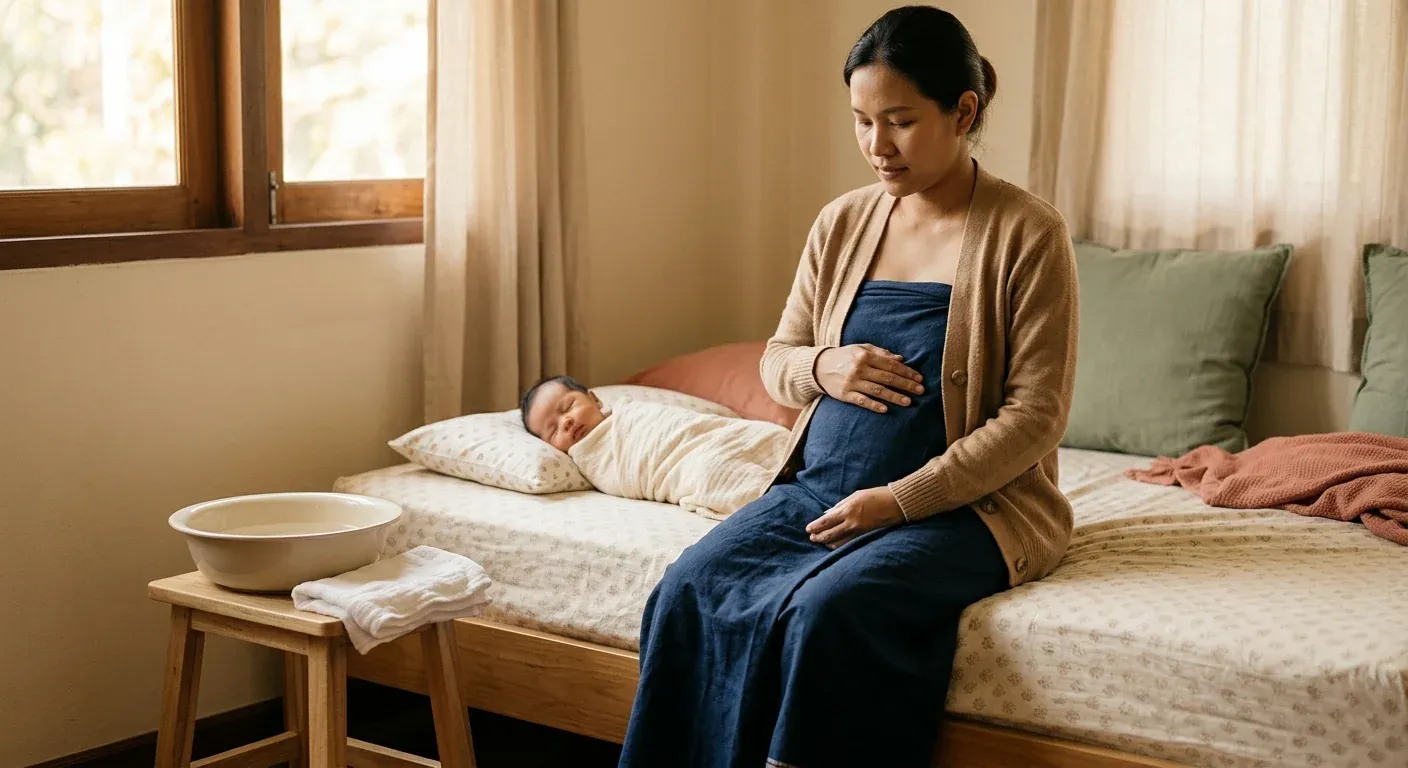
Your body just did something extraordinary. Recovery takes time — but knowing what is normal, what is healing, and what needs attention makes all the difference.
If you had a c-section, see our c-section recovery guide — many topics are different. This guide focuses on vaginal birth recovery.
The first six weeks after a vaginal birth are a period of intense physical change. Hormones shift, wounds heal, muscles rebuild, and milk comes in — all while you are feeding and caring for a newborn on little sleep. This guide draws on guidance from Mayo Clinic [1], the NHS [2], the CDC [3], and AAP HealthyChildren [4] to help you understand what is happening and when to ask for help.
Lochia: What the Bleeding Actually Is
Lochia is the vaginal discharge that follows every vaginal birth — a mix of blood, mucus, and tissue from the uterus as it contracts back to its pre-pregnancy size. It is not simply a heavy period.
The progression follows a predictable pattern [1]:
| Stage | Colour | Timing |
|---|---|---|
| Lochia rubra | Bright red | Days 1–4 |
| Lochia serosa | Dark red, then pinkish-brown | Days 4–10 |
| Lochia alba | Yellow or white | Days 10 to 4–6 weeks |
The total duration is typically 4 to 6 weeks. The flow slows and becomes watery before stopping [1].
Call your provider immediately if [3]:
- Bleeding soaks through a pad every hour for two consecutive hours
- You pass clots larger than an egg
- Discharge has a foul odour — this suggests infection
- You have a fever of 38°C (100.4°F) or higher alongside heavy bleeding
Heavy sudden bleeding after the flow has slowed — sometimes called a "secondary postpartum haemorrhage" — can also occur. If it soaks a pad within an hour, treat it as urgent.
Perineal and Tear Care
The perineum — the tissue between your vaginal opening and your anus — stretches considerably during a vaginal birth and may have been cut (an episiotomy) or torn naturally.
Degrees of tears
Perineal tears are classified by depth:
- 1st degree: skin only — may not need stitches
- 2nd degree: skin and muscle — stitches required
- 3rd degree: extends to the anal sphincter muscle
- 4th degree: extends through the sphincter to the rectal lining
Third- and fourth-degree tears require specialist repair and longer recovery. Your care team will tell you which degree you had.
Caring for stitches and soreness
Stitches are dissolving — you do not need to have them removed. They typically heal within one month [2]. Pain in the first two to three weeks is expected; it is unusual for episiotomy or tear pain to last beyond that [2].
- Apply an ice pack wrapped in cloth during the first 24–48 hours
- Use a squirt bottle of warm water over the perineum while urinating — this reduces the sting and dilutes urine
- Sit on a padded surface or cushion
- Take warm shallow baths (5 minutes, covering the perineum)
- Allow air exposure: lying on a towel without underwear for 10 minutes once or twice a day helps drying
Sitz bath
A sitz bath (soaking the perineal area in plain warm water in a shallow basin) for 10–15 minutes two to three times a day helps relieve soreness and is particularly helpful for haemorrhoids, which are common after vaginal birth [1]. Use plain water — no bath salts or soap.
Signs of infection
Contact your provider if you notice any of these in the perineal area [2]:
- Redness, swelling, or warmth beyond the first few days
- Pus or unusual discharge from the wound
- Pain that is getting worse rather than better
- A smell that is abnormal
- Fever alongside wound discomfort
Infection in perineal stitches is uncommon but treatable — do not ignore it.
Pelvic Floor Recovery
The pelvic floor muscles support your bladder, uterus, and bowel. They stretch significantly during vaginal delivery and need gentle, consistent rehabilitation.
Pelvic floor exercises (Kegels) are the foundation of this recovery [1]:
- Identify the muscles — imagine you are stopping the flow of urine
- Tighten them and hold for 3 seconds, then relax for 3 seconds
- Work up to 10–15 repetitions in a row, at least three times per day
- Breathe normally throughout — do not tense your abdomen, thighs, or buttocks
Some women experience leakage when coughing, laughing, or sneezing in the weeks after birth — this usually improves significantly with regular Kegel exercises. If leakage persists beyond 3 months, ask for a referral to a pelvic floor physiotherapist.
Diastasis recti — separation of the abdominal muscles down the midline — affects many women after pregnancy and birth. You may notice a gap or doming in the middle of your abdomen when you try to sit up from lying flat. This is not dangerous, but it does change how you should approach abdominal exercise. Talk to a physiotherapist before starting any abdominal workouts.
Warning Signs That Need Urgent Attention
The CDC lists these postpartum warning signs that require immediate medical care [3]:
Bleeding:
- Soaking through a pad every hour for two consecutive hours
- Passing clots larger than an egg or tissue
Infection / fever:
- Fever of 38°C (100.4°F) or higher
- Wound discharge with a foul odour
Blood clots (DVT / pulmonary embolism):
- Severe swelling, redness, or pain in a leg or arm — particularly in the calf
- Trouble breathing or chest pain
Neurological / cardiovascular:
- Severe or persistent headaches
- Vision changes or sudden dizziness
- Irregular heartbeat
Abdominal:
- Severe abdominal pain
Mental health:
- Thoughts of harming yourself or your baby — call 1323 (Thailand Mental Health Hotline, 24 hours) or go to the nearest emergency room
- Overwhelming sadness or hopelessness lasting more than 2 weeks
Postpartum complications including postpartum haemorrhage, infection, and blood clots can develop days or weeks after delivery. If something does not feel right, seek care — do not wait until your scheduled appointment.
The 6-Week Checkup
Your postpartum checkup should happen within 6 to 12 weeks after delivery. Some providers also offer a check-in at 2–3 weeks [1]. At the full appointment, your provider will typically:
- Examine your abdomen, vagina, cervix, and uterus
- Assess how any tears or stitches have healed
- Discuss mood and emotional wellbeing — ask for an EPDS screening if no one has offered one
- Address contraception choices for when you are ready
- Discuss breastfeeding and any concerns
- Clear you for exercise and sexual activity (if healing is complete)
This appointment is yours — bring a list of questions. Many women focus entirely on the baby's health and forget to mention their own concerns.
Breastfeeding, Contraception, and Sex
Breastfeeding in the early weeks
Early breastfeeding often involves engorgement, latch challenges, and nipple soreness. These are common and almost always resolvable with the right support. If you are struggling, ask your hospital or clinic for a referral to a lactation consultant [4]. Latching correctly from the start protects your nipples and establishes milk supply.
Mastitis (inflammation of breast tissue, often with a tender red area, fever, and flu-like symptoms) can develop in the first weeks of breastfeeding. See your doctor if this happens — it can be treated effectively.
Contraception after birth
Breastfeeding is not a reliable contraceptive. Even if your period has not returned, you can ovulate before you realise it. Discuss contraception options with your provider at your postpartum checkup or sooner if you are sexually active before then [4].
Returning to sex
There is no fixed rule about when to resume sexual activity [2]. Most providers advise waiting until after your 6-week checkup, until stitches or tears have fully healed, and until you feel ready — both physically and emotionally.
Dryness and discomfort during sex are very common in the postpartum period, partly due to lower oestrogen levels (especially while breastfeeding). A water-based lubricant helps [2].
Mental Health: Baby Blues and Beyond
Feeling weepy, overwhelmed, or irritable in the first two weeks after birth is common — this is baby blues and it usually resolves on its own.
If low mood, anxiety, or detachment from your baby persists beyond two weeks or is severe, this may be postpartum depression (PPD), which is a medical condition and deserves treatment. See our postpartum depression guide for a full explanation, screening information, and treatment options. The Thailand Mental Health Hotline 1323 (24 hours, free) is available if you need to talk.
Summary
Recovery after vaginal birth covers multiple systems at once. Here is what to expect:
| Timeline | What's happening |
|---|---|
| Days 1–7 | Lochia bright red; perineal soreness peaks; begin Kegels gently; milk comes in |
| Weeks 1–2 | Lochia darkens; stitches healing; soreness improving; baby blues common |
| Weeks 2–6 | Lochia fades to yellow/white then stops; most stitches healed by week 4 |
| 6 weeks | Postpartum checkup; discuss return to sex, contraception, exercise clearance |
| 3 months+ | Pelvic floor strengthening ongoing; diastasis recti can still be addressed |
See a doctor urgently for heavy bleeding, fever, severe pain, signs of blood clot, or any symptom from the CDC warning signs list above.
แหล่งอ้างอิง
- Mayo Clinic — Postpartum care: What to expect after a vaginal delivery. Lochia color progression (bright red → dark red → yellow/white) over 4–6 weeks; perineal care (ice packs, squirt bottle, warm baths 5 min); sitz bath (10–15 min, 2–3x/day); Kegel exercise technique and frequency; postpartum exam within 6–12 weeks.
- NHS — Episiotomy and perineal tears. Stitches dissolve and heal within 1 month; pain unusual beyond 2–3 weeks; infection signs (redness, pus, persistent pain, unusual smell); return to sex — no fixed rule, water-based lubricant recommended; third-degree tear classification noted.
- CDC — Hear Her: Urgent Maternal Warning Signs. Heavy bleeding (soaking a pad/hour × 2 hrs); clots > egg size; foul-smelling discharge; leg swelling/pain (DVT); thoughts of self-harm/harm to baby; severe headaches; vision changes; fever ≥100.4°F; chest pain; severe abdominal pain; trouble breathing. 'Most pregnancy-related deaths are preventable.'
- AAP HealthyChildren — Breastfeeding section. Recommends breastfeeding as sole nutrition for ~6 months; 'Birth Control While Breastfeeding' article confirms breastfeeding is not a reliable contraceptive; lactation consultant resources listed; engorgement and latch resources.
- ACOG — Postpartum Care and You (womens-health/faqs). International obstetrics authority guidance on the fourth trimester: postpartum physical recovery, warning signs, contraception, breastfeeding support, emotional wellbeing, return to sex.
- Samitivej Hospitals TH (samitivejhospitals.com/th) — Thai institutional authority anchor for medical vocabulary used in the Thai version of this article.