
Postpartum Depression: You Are Not a Bad Mother. You Are Not Alone.
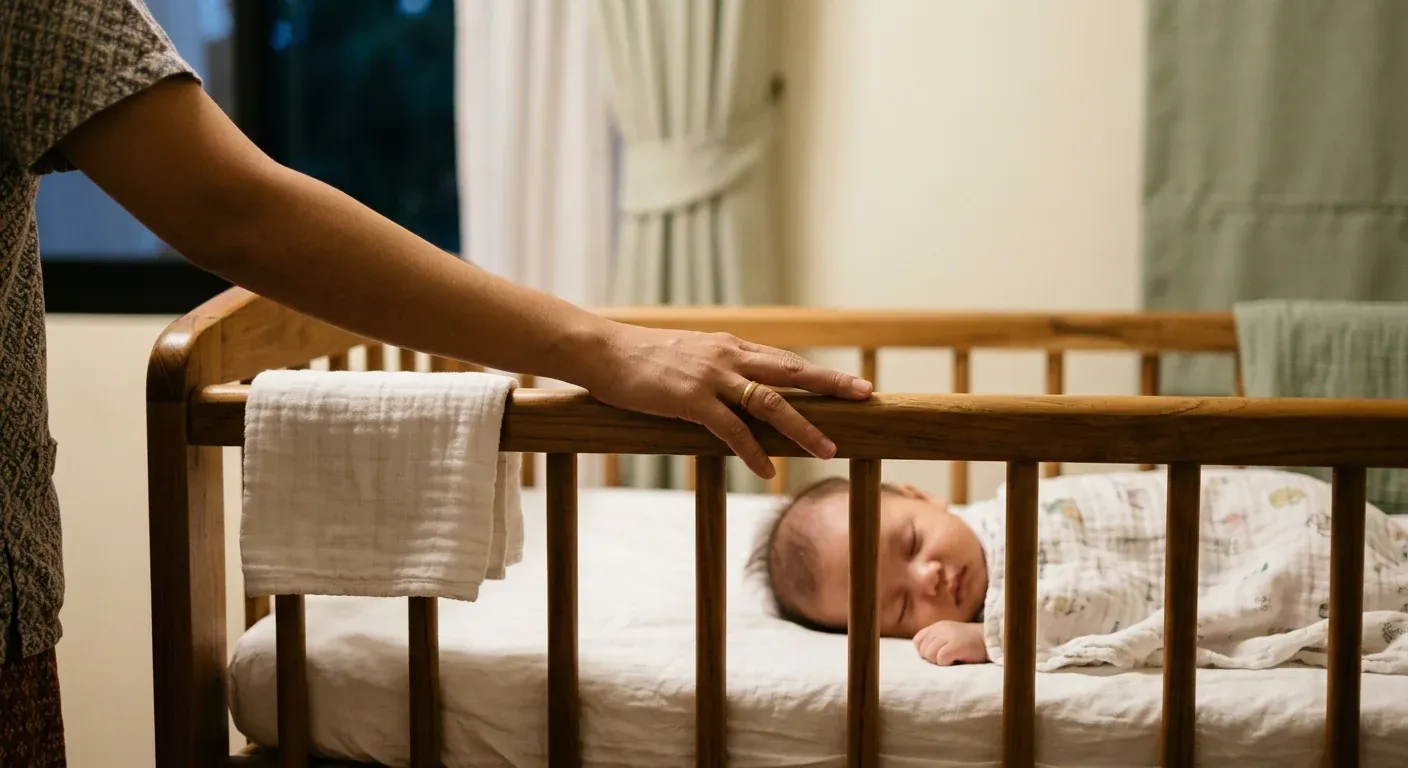
If you're crying for no reason and can't explain it to anyone — you are not a bad mother. You are not alone. What's happening has a name, and there is real help.
If you are having thoughts of harming yourself or your baby, this is a medical emergency.Call the Thailand Mental Health Hotline: 1323 (24 hours, free) or go to the nearest emergency room.
Most new mothers expect to feel happy. Many feel the opposite — exhausted, weepy, irritable, disconnected — and then feel guilty for feeling that way. This article explains what's happening, why it happens, and what you can do. It draws on guidance from the NHS [1][2], the CDC [3], and Mayo Clinic [4].
Baby Blues, PPD, and Postpartum Psychosis — What's the Difference?
These three conditions exist on a spectrum of severity. Understanding which you're experiencing shapes what kind of help to seek.
Baby Blues (mild, temporary)
Baby blues is a brief emotional low that affects many new mothers in the days immediately after birth. It is not a disorder.
- Onset: 2–3 days after delivery [4]
- Duration: up to 2 weeks — resolves on its own [4]
- Symptoms: mood swings, crying, anxiety, tiredness, difficulty sleeping
Baby blues does not require medical treatment, but it does require rest, support, and time.
If your low mood persists beyond 2 weeks, worsens, or stops you from functioning — that is no longer baby blues. That is postpartum depression, and it deserves care.
Postpartum Depression (PPD) — a clinical illness, not weakness
Postpartum depression is a medical condition. The CDC is clear: PPD is "more intense and lasts longer than baby blues" [3].
- Onset: usually within the first few weeks after birth, but can begin during pregnancy or up to one year after delivery [4]
- Duration: months to longer if untreated; with treatment, many mothers improve within 3–6 months [1]
- Affects: approximately 1 in 8 women who have recently given birth [3]
PPD is not caused by weakness, failure, or loving your baby less. It is caused by a combination of hormonal shifts, sleep deprivation, physical recovery, and psychological adjustment — often amplified by social isolation and unspoken pressure.
- Persistent low mood or hopelessness
- Crying frequently with no clear reason
- Anhedonia — loss of interest or pleasure in things you used to enjoy
- Difficulty bonding with your baby
- Feeling like a bad mother, or that your baby would be better off without you
- Intrusive thoughts — unwanted thoughts about harming yourself or your baby (these are a symptom of the illness, not a desire — they require immediate help)
- Severe anxiety or panic attacks
- Exhaustion beyond what rest can fix
- Withdrawal from partner, family, and friends
Postpartum Psychosis — a medical emergency
Postpartum psychosis (PPP) is rare — affecting roughly 1 in 1,000 mothers — but it is a psychiatric emergency [2].
- Onset: usually within the first 2 weeks after delivery, often within hours or days [2]
- Symptoms: hallucinations (hearing or seeing things that aren't there), delusions (fixed false beliefs), mania, extreme confusion, rapidly shifting mood
- Risk: PPP "can get worse rapidly and the illness can risk the safety of the mother and baby" [2]
If you or someone near you shows signs of postpartum psychosis, call emergency services or go to the emergency room immediately. In Thailand: call 1323 (mental health hotline) or 1669 (EMS). Do not wait.
The good news: "Most people with postpartum psychosis make a full recovery as long as they receive the right treatment" [2].
Screening — How PPD Is Diagnosed
PPD is not diagnosed by a blood test — it is identified through a clinical conversation and a validated screening tool.
The Edinburgh Postnatal Depression Scale (EPDS) is the international standard for PPD screening. It consists of ten questions about your mood and feelings over the past week. Your OB-GYN, midwife, or health visitor may administer it at your postpartum checkup — you can also ask for it.
A score above a threshold does not mean you "have PPD" — it means you should speak with a doctor. EPDS is a starting point, not a verdict.
If no one has asked you how you're feeling emotionally at your postpartum appointments, you have every right to bring it up yourself.
What Causes PPD?
PPD does not have a single cause — it emerges from a convergence of factors [4]:
- Hormonal change: estrogen and progesterone drop sharply after delivery
- Sleep deprivation: severe, cumulative, and underestimated
- Identity shift: becoming a mother changes who you are and how others see you
- Unmet expectations: the gap between how you imagined motherhood and how it feels
- Social pressure: expectations to be joyful, competent, and grateful — without complaint
- History: previous depression, anxiety, or a difficult pregnancy increases risk
- Low support: isolation, relationship strain, or financial stress compounds all of the above
None of these are choices you made. None are things you "should have" prevented.
Treatment — Evidence-Based Options
PPD responds well to treatment [1][4]. Two main approaches:
Talking therapy (psychotherapy) Cognitive behavioural therapy (CBT) and other structured therapies help you understand and change thought patterns contributing to depression. Your OB-GYN can refer you to a perinatal mental health specialist or psychiatrist.
Medication (antidepressants) Antidepressants are an effective treatment for moderate to severe PPD. Many are safe during breastfeeding. The NHS confirms: antidepressants are an option even while nursing [1].
Discuss both options with your OB-GYN or a psychiatrist. There is no hierarchy — both therapy and medication are evidence-based. Some mothers benefit from both together. Do not self-medicate; please speak to a doctor.
In Thailand, mental health care is available at:
- Government hospitals (outpatient psychiatric or OB-GYN departments)
- Private hospitals with perinatal mental health services
- Mental health hotline: 1323 (24 hours, free counselling and referral)
Partners and Fathers — PPD Affects Them Too
Studies show that new fathers and partners can also experience postpartum depression [4]. Symptoms are similar — sadness, tiredness, anxiety, withdrawal — and may be triggered by the same sleeplessness, role adjustment, and relationship strain. Being young, having a history of depression, or experiencing financial stress are risk factors.
If you are a father or partner reading this and recognising yourself — this is real, and help is available. The same resources and the same hotline (1323) apply to you.
When to Seek Help — a Simple Rule
You don't need to wait until you're in crisis to ask for help.
Seek support from your OB-GYN, doctor, or the 1323 hotline if:
- Low mood or tearfulness has lasted more than 2 weeks after birth
- You cannot get out of bed, eat, or care for yourself
- You are having thoughts of harming yourself or your baby
- You feel completely detached from your baby and it is not improving
- Someone close to you has noticed a change and is worried
Seeking help is an act of care for your baby, not a sign of failure.
Summary
Postpartum depression is a medical illness that affects approximately 1 in 8 mothers. It is not weakness. It is not your fault. It has effective treatments.
| Baby blues | Postpartum depression | Postpartum psychosis | |
|---|---|---|---|
| Onset | 2–3 days post-birth | Within weeks (or up to 1 year) | Within days–2 weeks post-birth |
| Duration | Up to 2 weeks | Months if untreated | Acute 2–12 weeks; full recovery 6–12 months |
| Severity | Mild, self-limiting | Moderate–severe | Severe — medical emergency |
| Action | Rest + support | See OB-GYN or psychiatrist | Go to ER immediately |
If you are in crisis: Call 1323 (Thailand Mental Health Hotline, 24 hours) or go to the nearest emergency room.
If your mood has been low for more than 2 weeks, if you're having intrusive thoughts, or if someone who loves you is worried — please reach out. You deserve care as much as your baby does.
แหล่งอ้างอิง
- NHS — Postnatal depression. Definition; onset during pregnancy through to 1 year postpartum; baby blues vs PND distinction (blues ≤2 weeks, PND persists/worsens); symptoms including anhedonia and bonding difficulties; treatment (talking therapy, antidepressants safe while breastfeeding); partner/father PPD noted; usual recovery 3–6 months.
- NHS — Postpartum psychosis. Rare (~1 in 1,000 mothers); onset within first 2 weeks (often hours/days after delivery); symptoms: hallucinations, delusions, mania; medical emergency — 'can get worse rapidly and risk the safety of the mother and baby'; most make a full recovery with right treatment; acute phase 2–12 weeks, full recovery 6–12 months.
- CDC — Depression Among Women (Reproductive Health). PPD defined as 'more intense and lasts longer than baby blues'; approximately 1 in 8 women with recent live births experience PPD symptoms; risk factors include depression history and low social support; depression diagnoses at delivery increased sevenfold 2000–2015.
- Mayo Clinic — Postpartum depression: Symptoms and causes. Baby blues onset 2–3 days, resolves ≤2 weeks; PPD onset within weeks of birth, can start during pregnancy or up to 1 year after; PPP develops within first week — rare but severe, 'may lead to life-threatening thoughts or behaviors and requires immediate treatment'; fathers/partners can also experience PPD; intrusive thoughts; anhedonia listed as symptom.
- ACOG — Postpartum Depression FAQ (womenshealth.org). International obstetrics authority guidance on PPD: definition, screening, treatment options including therapy and medication; EPDS screening tool recommended.
- Samitivej Hospitals TH (samitivejhospitals.com/th) — Thai institutional authority anchor for medical vocabulary used in this article (ภาวะซึมเศร้าหลังคลอด; EPDS; สายด่วนสุขภาพจิต 1323).