
Flying with Baby: Your Complete Safety Guide
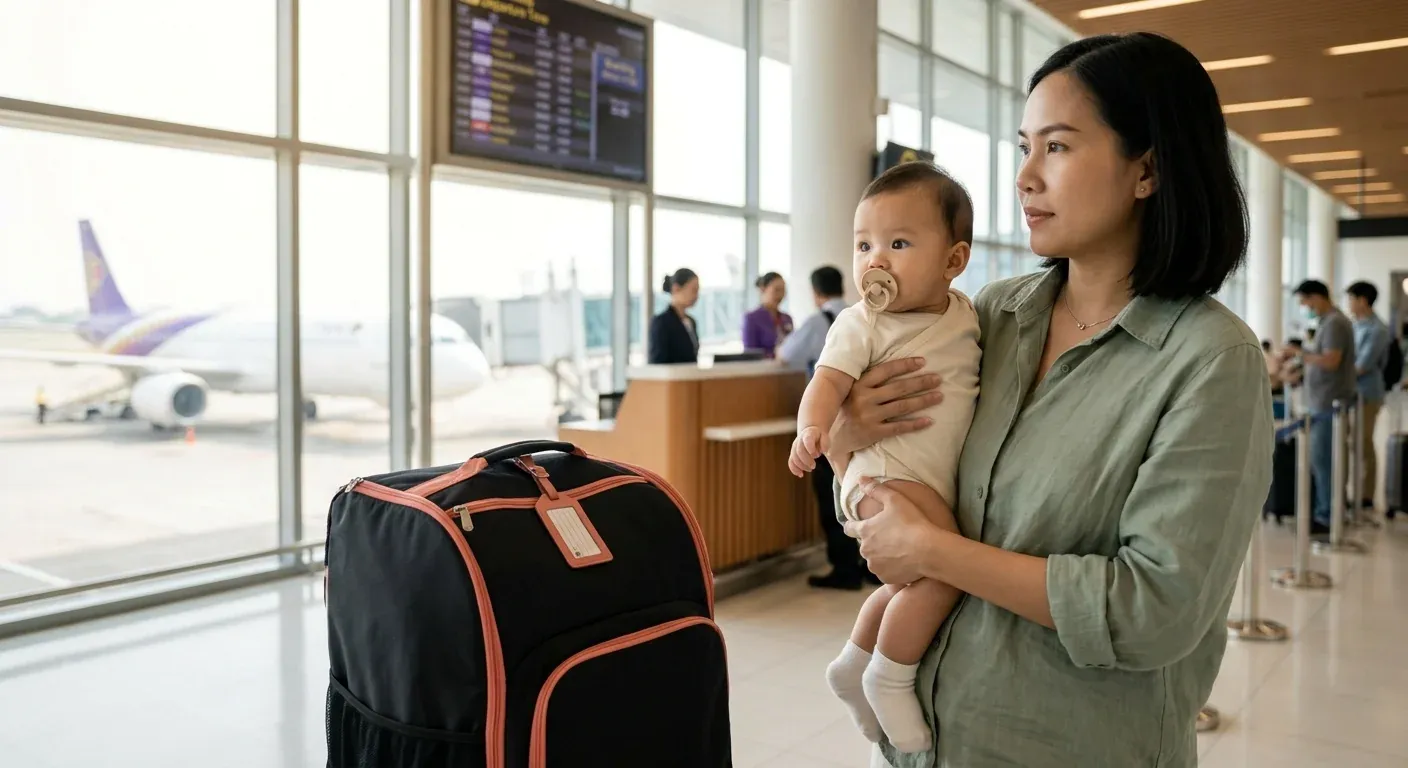
The safest seat on any aircraft is the one designed for your child — not your lap.
How Old Does a Baby Need to Be to Fly?
Most major airlines accept infants from 7 days old, though some carriers require 14 days and some set no minimum beyond their own medical-fitness policy. Always call the airline before booking.
The AAP's own guidance is more cautious: ideally wait until your baby is 2–3 months old [1]. In the first weeks of life, newborn immune systems are immature, cabin air is recirculated, and the enclosed environment raises infection risk. Premature babies should not fly until they have met corrected-age milestones and been cleared by a neonatologist — the cabin pressure change can stress underdeveloped lungs.
Bottom line: Check with your pediatrician first, regardless of the airline's minimum.
The Lap-Held Infant Problem
Airlines allow children under 2 to travel without a paid seat, held on a parent's lap. It is legal — but the AAP and FAA both strongly discourage it [1].
Here is why: turbulence is the leading cause of in-flight injuries to children. During severe turbulence, a parent cannot maintain a secure grip on a baby. The infant becomes an unrestrained object subject to sudden force.
The FAA's recommendation is clear: every child under 40 lbs (approximately 18 kg) should be in their own seat, secured in an FAA-approved child restraint system (CRS) — the same type of rear-facing car seat you use in a vehicle. Buying a separate seat for your baby is the single most important safety upgrade you can make for air travel.
FAA-Approved Car Seats on Aircraft
Not every car seat is cleared for aircraft use. Look for the label:
"This restraint is certified for use in motor vehicles and aircraft."
If that label is absent, the seat is not approved for flight regardless of its road-safety credentials. Most rear-facing infant car seats and many convertible car seats carry the dual certification — check yours before you pack it [1].
Seating rule: A rear-facing CRS must go in a window seat so it does not block aisle egress. Forward-facing CRS seats can go in window or middle seats. No CRS is permitted in an exit row.
The CARES Harness (Alternative for Older Children)
The CARES harness (Child Aviation Restraint System) is the only FAA-approved harness alternative to a car seat on aircraft. It is approved for children weighing 22–44 lbs (approximately 10–20 kg) — roughly 12 months and older. It is not approved for infants. A CARES harness straps over the aircraft seat back and attaches to the seatbelt, adding a shoulder harness to the lap belt. It packs small and is worth owning once your toddler outgrows the lap-seat weight limit.
Ear Pressure During Ascent and Descent
As the plane climbs and descends, cabin pressure changes and the Eustachian tube struggles to equalise. Babies feel this as pain — they cannot pop their ears deliberately the way adults can.
The solution: swallowing. Sucking and swallowing open the Eustachian tube naturally [1]. During every ascent and descent:
- Breastfeed or bottle-feed if your baby is willing — this is the most effective option.
- Offer a pacifier if your baby uses one.
- Do not wake a sleeping baby just to feed — the discomfort is real but not dangerous, and a sleeping baby is often not experiencing pain at all.
Babies with a current ear infection (acute otitis media) may have significantly more pain during pressure changes. Consult your pediatrician before flying if your baby has had a recent ear infection.
A Note on Medications
The AAP does not recommend antihistamines (including diphenhydramine / Benadryl or dimenhydrinate) to sedate babies for flights. These medications can have unpredictable and serious side effects in young children — including paradoxical excitation (making the baby more agitated, not less). Some children have paradoxical reactions. There is no safe "make them sleep on the plane" medication for infants [1]. If you are worried about a long flight, talk to your pediatrician — but do not give any over-the-counter sleep aid without explicit guidance.
What to Pack
Documents First
- Passport: Required even for newborns on international flights. Thailand issues passports to infants from birth — bring the birth certificate to the registration office. Processing takes 3–5 business days in Bangkok; allow more time at provincial offices.
- Birth certificate copy: Some airlines request proof of age for lap infants; carry a copy regardless.
- Paediatrician's fit-to-fly letter: Not universally required, but worth having for premature babies or babies under 2 months.
Cabin Bag Essentials
- Diapers and wipes: Pack 50% more than you think you need. Delays happen.
- Change of clothes — for the baby AND for you. Blowouts at 35,000 feet are a rite of passage.
- Breast pump: Classified as a medical device; exempt from the standard carry-on limit on most carriers (check airline policy). Bring documentation if you are pumping regularly.
- Formula and expressed breast milk: TSA (and most airport security globally) allows reasonable quantities of formula, breast milk, and juice for infants beyond the standard liquid limit. Declare it at the security checkpoint; you may be asked to open and test containers. Pre-mix formula into measured powder portions and add bottled water after security.
- Favourite toy or comfort item: Familiar smells and textures help settle babies in unfamiliar environments.
Formula Water on International Flights
Most commercial aircraft serve tap water that is potable for adults but may not be ideal for mixing formula. Bring sealed bottled water for formula preparation, or use ready-to-feed single-serve formula cartons (no mixing required).
Breastfeeding and Pumping in Flight
Breastfeeding on an aircraft is legal in all jurisdictions and protected in most. Airlines cannot refuse a breastfeeding parent. A window seat gives the most privacy; a nursing cover or scarf can help if you prefer. Feed freely during ascent and descent — it addresses both hunger and ear pressure simultaneously.
If you are exclusively pumping, ask the flight attendant for access to a power outlet. Bring a manual pump as backup. Most carriers' aircraft have at least a USB outlet per seat on newer aircraft; full AC outlets vary by route and seat class.
Dehydration in Cabin Air
Aircraft cabin air is kept at approximately 10–25% relative humidity — significantly drier than the ground-level air most people are accustomed to. Adults notice dry skin and throats; babies lose fluids through respiration and skin more quickly than adults.
For breastfed babies: feed on demand more frequently than usual during a long flight — the extra feeds address both hunger and cabin-air dryness.
For formula-fed babies: offer slightly more fluid than the usual schedule.
Watch for a dry mouth, dark urine, or fewer wet diapers as early signs of ภาวะขาดน้ำ (dehydration) [2]. A well-hydrated baby will produce at least one wet diaper every 3–4 hours.
Jet Lag in Babies
Babies under 3 months have not yet established a strong circadian rhythm, so they are paradoxically more adaptable to time-zone shifts than older infants. Babies 4–12 months who have settled into a predictable sleep pattern will feel jet lag — usually showing up as early morning waking, night feeds resuming, or an altered nap schedule for 3–7 days.
Strategies that help:
- Shift gradually before departure — move bedtime 15 minutes earlier or later each day in the 3–4 days before a significant time-zone change.
- Prioritise daylight exposure at the destination: natural light is the most powerful zeitgeber (biological clock resetter) for infants.
- Maintain feed and sleep cues: familiar sounds (a white noise machine), a consistent pre-sleep routine, and a known sleep sack or swaddle help the baby's body recalibrate faster than it would on its own.
- Expect 3–7 days for full adjustment; be patient.
Immunisations Before Travel
Before travelling internationally with an infant, review the destination's recommended and required vaccines. The standard Thai immunisation schedule covers hepatitis B (from birth), BCG (at birth), and other core vaccines — but not all travel destinations' specific risks.
Consult your pediatrician at least 4–6 weeks before departure. Some vaccines require a series (e.g. hepatitis A) and cannot be compressed. Infants under 6 months cannot receive many travel vaccines (including rabies pre-exposure prophylaxis, yellow fever, and certain meningococcal vaccines) — for those destinations, prevention depends on avoiding exposure rather than vaccination.
Carry vaccination records (หนังสือสุขภาพ / yellow booklet) when travelling internationally [3].
Thai Practicalities
Airline Infant Policies (Thai Airways, Bangkok Airways)
Airline policies change — always verify directly with the carrier. General norms for Thai carriers:
- Infant fare: Typically 10% of the adult base fare for international routes (lap infant, no seat). Varies by carrier and route.
- Separate seat with CRS: Purchase a child's ticket (usually 50–75% of adult fare) and inform the airline at booking that you will bring a car seat. Confirm the seat is FAA/EASA-approved for the aircraft.
- Bassinet (เปลในเครื่องบิน): Bulkhead wall-mounted bassinets are available on many medium- and long-haul routes. Book early — there are only 1–4 per aircraft. Weight limits typically apply (up to ~10 kg for the baby; baby must be able to lie flat). The bassinet is for sleeping only; the baby must be in your arms or a CRS during turbulence.
- Passport requirement: All passengers — including infants — require a valid passport for international travel. Thai passports for minors are issued separately from parents. Allow 7–10 business days for processing from the district office (สำนักงานเขต for Bangkok; อำเภอ for provinces). Express processing (3 business days) is available at the Chaengwattana Consular Affairs office.
Airport Security with a Baby
- Remove the baby from the carrier/sling and carry them through the metal detector in your arms.
- Strollers and car seats go through the X-ray machine separately.
- Liquid formula, breast milk, and baby food are exempt from standard liquid limits — declare them and allow time for additional screening.
- At Suvarnabhumi (BKK), there is a dedicated family lane at most security checkpoints — look for signs or ask an officer.
Summary
Safe air travel with a baby requires one fundamental decision before all others: buy your baby their own seat and bring a FAA-approved rear-facing car seat. Everything else — ear pressure management, packing, feeding, jet lag — is manageable with a little planning. The AAP and FAA are aligned: a secured child in a certified seat is the only reliably safe option when the plane hits turbulence.
Start with your pediatrician at least 4–6 weeks before international travel to review vaccination timing and confirm your baby is fit to fly.
แหล่งอ้างอิง
- AAP HealthyChildren — Flying with Baby: Parent FAQs & Tips for Safer, Easier Air Travel. Confirms: minimum age ideally 2–3 months (safe at 7 days); turbulence leading cause of in-flight child injury; sucking/nursing/pacifier during ascent/descent eases ear pressure; FAA-approved CRS required; Benadryl/diphenhydramine can have serious side effects — AAP does not recommend antihistamines for infant sedation on flights; lap-held infants cannot be held securely during turbulence.
- NHS — Dehydration. Signs of dehydration in babies: sunken fontanelle, fewer wet nappies than usual, few or no tears when crying, drowsy or irritable. Babies are more at risk of dehydration than adults.
- CDC Travelers' Health — Traveling with Children. Pre-travel appointment recommended at least one month before departure; vaccine schedule limitations for infants under 6 months for certain travel vaccines (e.g. MMR available for international travel from 6–11 months).
- FAA — Kids Corner / Flying with Children. 'The safest place for your child under the age of two on a U.S. airplane is in approved child restraint system (CRS) or device, not in your lap.' FAA strongly discourages lap-held practice. CARES harness: 22–44 lbs; CRS must bear label 'certified for use in motor vehicles and aircraft'. 'Buying a ticket for your child is the only way to guarantee that you will be able to use a CRS.'
- Samitivej Hospitals Thailand (samitivejhospitals.com/th) — Thai institutional anchor for infant travel terminology and pediatric guidance.
- กรมอนามัย (anamai.moph.go.th) — Department of Health Thailand. Thai government maternal and child health authority.