
Diaper Rash: Causes, Treatment, and When to See a Doctor
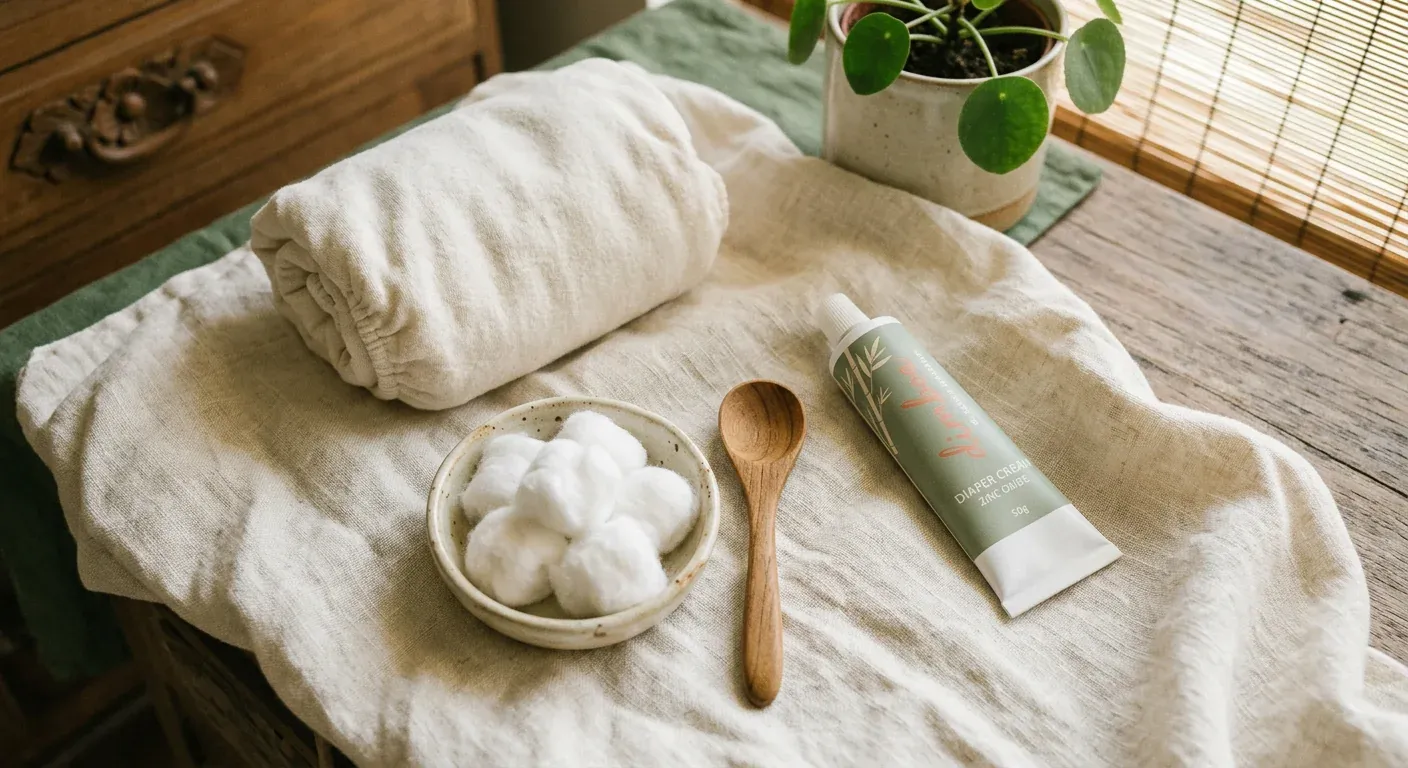
Diaper rash is not your fault It happens to almost every baby — know what you're dealing with and you can handle it from day one.
Diaper rash is one of the most common skin problems in babies and toddlers. According to AAP [1], roughly 7–35% of babies will experience diaper rash at some point. Most cases can be treated at home — but the right treatment depends on knowing which type you're dealing with.
This article draws on AAP [1], NHS [2], and an AAP clinical report on diaper dermatitis [3] to help you tell irritant rash from a yeast infection, treat each correctly, and know when to bring in a doctor.
Two types of diaper rash to know
Type 1: Irritant contact dermatitis
The most common type. It happens when your baby's skin is in contact with an irritant for too long.
Signs:
- Red, inflamed skin in the area the diaper touches — belly, bottom, inner thighs
- No rash in the skin folds (this is a key clue)
- Skin may look shiny or flaky
- Baby cries or fusses when you touch the area
Common causes:
- Diaper left on too long when wet or soiled
- Stool (contains protein-digesting enzymes that break down skin)
- Diaper that's too tight, causing friction
- Wipes with fragrance or alcohol
- Starting solid foods (stool composition changes, becomes more acidic)
Type 2: Candida yeast rash (Candidal diaper dermatitis)
Caused by the yeast Candida albicans, which thrives in warm, moist conditions.
Signs:
- Bright red rash with clearly defined borders
- Rash is present inside the skin folds — this is the most important sign
- Small red dots or bumps scattered around the edges of the rash (satellite lesions)
- Rash doesn't improve with normal care after 3–4 days
Common causes:
- Prolonged moisture — yeast loves this environment
- Often follows a course of antibiotics in baby or mom (antibiotics kill the bacteria that keep yeast in check)
- Irritant rash that went untreated long enough for yeast to take hold
Simple rule: Rash in the skin folds → think yeast. Rash only on the flat surfaces → think irritant.
Treating diaper rash at home
The CARE method for irritant rash
C — Change (more often)
- Change the diaper as soon as it's wet or soiled — don't wait for a schedule
- Newborns may need 8–12 changes per day
A — Air (let skin breathe)
- After each change, let baby's bottom be exposed to air for 10–15 minutes
- Air time is one of the most effective single things you can do
R — Rinse (clean with water)
- Use warm water to clean the area — not wipes if you can avoid it
- If you use wipes, choose fragrance-free, alcohol-free
- Pat dry with a soft cloth — don't rub or scrub
E — Emollient (barrier cream)
- Apply a cream containing zinc oxide or petrolatum at every diaper change
- These create a physical barrier against moisture and irritants
- Apply thickly — you don't need to wipe it all off each time (just apply on top)
Treating a Candida yeast rash
Zinc oxide alone won't treat a yeast rash. You need an antifungal:
- A doctor may prescribe a topical antifungal cream — talk to your doctor or pharmacist before buying over-the-counter
- Apply 2–3 times a day after cleaning and patting dry, before adding a zinc oxide layer on top
- Continue for 3–5 days after the rash has cleared to prevent it from coming back
Prevention: better than cure
Habits that prevent rash
- Change frequently — especially after a bowel movement; don't leave it
- Apply barrier cream every time before putting the diaper on, even if skin looks fine
- Choose a well-fitting diaper — not too tight, with good breathability
- Cloth vs disposable: neither is clearly better — what matters is how often you change and how well you care for the skin
- Avoid talcum powder in the diaper area — it doesn't help rash and can be inhaled into baby's lungs [1] [2]
When starting solid foods
Diaper rash often flares when babies start solids because stool composition changes. Be prepared:
- Increase how often you change the diaper during this phase
- Apply barrier cream more thickly and more often
- Note which foods seem to make the rash worse (acidic fruits are common triggers)
When to see a doctor
Most diaper rashes resolve at home, but bring your baby to the doctor if:
- Rash hasn't improved in 3–4 days with proper home care
- Suspected yeast rash — rash in skin folds, satellite lesions
- Rash is spreading outside the diaper area onto abdomen, back, or limbs
- Pustules or open sores on the skin
- Baby has a fever along with the rash
- Baby is in significant pain — crying at every diaper change
- Rash in a newborn under 6 weeks — see a doctor sooner rather than later
Signs that need urgent care
- Rash turns purple or bluish — may indicate serious infection
- Baby has a high fever and appears unwell
- Rash spreads rapidly within a few hours
Common questions
"Should I use baby powder?"
No. AAP [1] and NHS [2] both advise against it. Talcum powder can be inhaled into baby's lungs, doesn't treat rash, and may further irritate skin.
"Is cloth better than disposable?"
There's no evidence that either type is better. What matters most is how frequently you change the diaper and how well you care for the skin — not the material.
"Does diaper rash hurt?"
Yes. An inflamed rash is painful for your baby, especially when urine touches the irritated skin. Treating early is always better.
Summary
Diaper rash is nearly universal — almost every baby gets it. What matters is recognizing it and responding correctly.
Key points to remember:
- Tell them apart: rash in skin folds = think yeast; rash only on flat surfaces = irritant
- CARE: change often, air the skin, rinse with water, apply barrier cream
- Yeast rash needs antifungal cream — zinc oxide alone won't clear it
- Prevention is better than treatment: apply barrier cream every time, change immediately after soiling
- No talcum powder: it doesn't help and poses an inhalation risk
- See a doctor if rash doesn't improve in 3–4 days, or sooner if there are warning signs
Your baby's skin is delicate — good habits from the very first day make a real difference. Don't wait for a rash to appear before you start using barrier cream.