
Cradle Cap: Home Care and When to See a Doctor
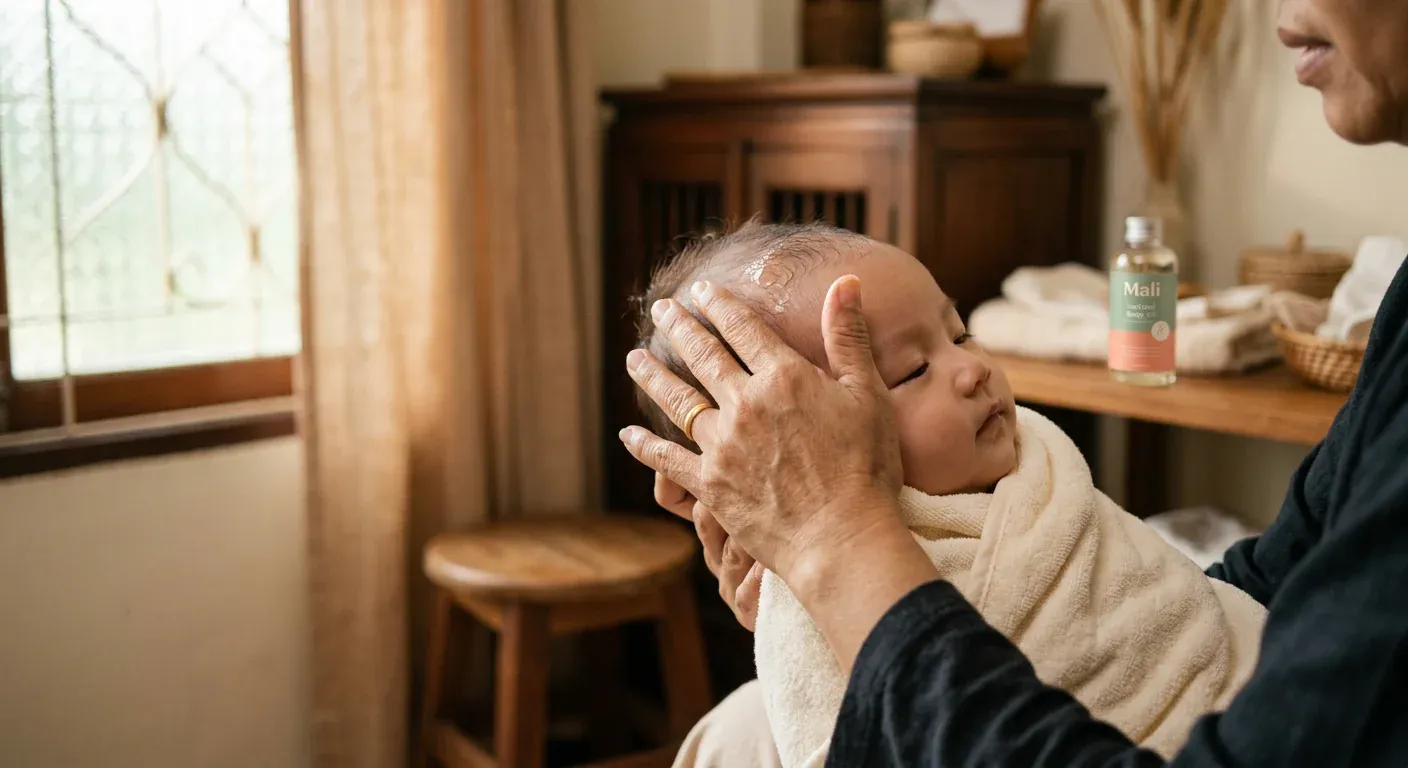
Cradle cap looks alarming — but it doesn't hurt, doesn't itch, isn't dangerous. Most cases clear up on their own in a few months. The key word is gentle.
A few weeks into your baby's life — you notice yellowish, oily-looking scales on their scalp. Many parents panic, thinking something is wrong with the skin or that they haven't been cleaning enough. The truth: it's cradle cap (the medical name is infant seborrheic dermatitis).
NHS [1] puts it directly: cradle cap "usually goes away on its own within a few months."
This guide draws on NHS [1], AAD [2], and Samitivej Hospital [5] — what it is, how to treat it, and when to see a doctor.
What cradle cap is
Cradle cap is a common skin condition in babies, especially between 2 weeks and 3 months. It looks like:
- Yellow, oily-looking scales on the scalp
- Sometimes light brown or whitish
- Common locations: scalp, eyebrows, behind the ears, sometimes the chest or neck
- The skin underneath may look slightly red
- No itch, no pain — your baby doesn't feel it
Why it happens
Not a hygiene problem. Not an allergy. Not a fungal infection (despite the medical name "seborrheic dermatitis"). The exact cause isn't fully understood — the leading theory is that maternal hormones passed through the placenta stimulate your baby's oil glands to overproduce.
That's why it clears on its own — as those maternal hormones leave your baby's system, the gland activity normalises.
Home care
NHS [1] gives a clear three-step routine:
Step 1 — Oil to loosen the scales
NHS [1]: "lightly massage an emollient (moisturiser) or coconut oil on to your baby's scalp to help loosen the scales."
Safe options:
- Coconut oil — recommended
- Fragrance-free emollient designed for babies
- Mineral oil is also acceptable
How:
- 2–3 drops of oil onto the scalp
- Massage gently in circles
- Let it sit for 15–30 minutes so the oil softens the scales
Step 2 — Brush gently
NHS [1]: "gently brush your baby's scalp with a soft brush and then wash it with baby shampoo."
- Use a soft baby brush (or a soft cloth)
- Brush gently in one direction
- Loosened scales lift away
Step 3 — Wash with baby shampoo
- Fragrance-free baby shampoo
- Gently massage to wash out the oil and scales
- Pat dry with a soft cloth
Frequency
Do this 2–3 times a week — not daily. Over-washing dries the scalp and triggers more oil production.
What NOT to do
NHS [1] is explicit:
"do not use olive oil, it may not be suitable for use on skin.""do not use peanut oil (because of the allergy risk).""do not use soap, adult shampoos or products containing fragrance or perfume.""do not pick crusts because this can increase the chance of infection."
Avoid:
- Olive oil — research suggests it can damage the skin barrier
- Peanut oil — peanut allergy risk
- Adult soap or shampoo — wrong pH
- Fragranced products — irritating
- Picking the scales — risk of infection and scarring
Scales fall off when they're ready — don't rush them.
When to see a doctor
Most cradle cap doesn't need a doctor's visit. NHS [1] advises seeing a GP if:
- It hasn't improved after 2–3 weeks of correct home care
- The rash has spread beyond the scalp to most of the body
- The scales bleed or weep fluid
- The affected area looks swollen or inflamed
- Your baby seems to be in pain or itching badly (cradle cap normally doesn't itch)
Signs that suggest something else:
- A rash spreading rapidly → possibly eczema (atopic dermatitis)
- Infection from picking → may need antibiotics
- Yellowish skin all over the body → unrelated to cradle cap, ask about jaundice
Common myths
"It's because I don't bathe my baby often enough"
Untrue — cradle cap is hormonal, not hygienic.
"I have to treat it fast or it will spread"
Untrue — cradle cap clears on its own. Treatment helps it look tidier and may speed it up, but there's no urgency.
"Will it leave a scar?"
No — cradle cap clears without marks, unless you pick the scales and cause skin damage.
When does it clear?
Most cases resolve by age 4–6 months. Some take longer — up to 12 months can still be normal.
If it persists past 12 months, see a doctor — not because it's dangerous, but to confirm whether it's still cradle cap or another form of seborrheic dermatitis or eczema.
Summary
- Cradle cap is normal — maternal hormones, not hygiene
- Coconut oil + soft brush + baby shampoo — the simple routine that works
- No olive oil, no peanut oil, no picking
- 2–3 times a week is enough — daily washing makes it worse
- Clears on its own by 4–6 months
- See a doctor if: no improvement in 2–3 weeks · bleeding/oozing · spreading off the scalp
It looks more dramatic than it is. Be gentle, don't rush — your baby will have a smooth scalp again in a few months.