
Baby Acne: Why It Happens, How to Care for It, When to See a Doctor
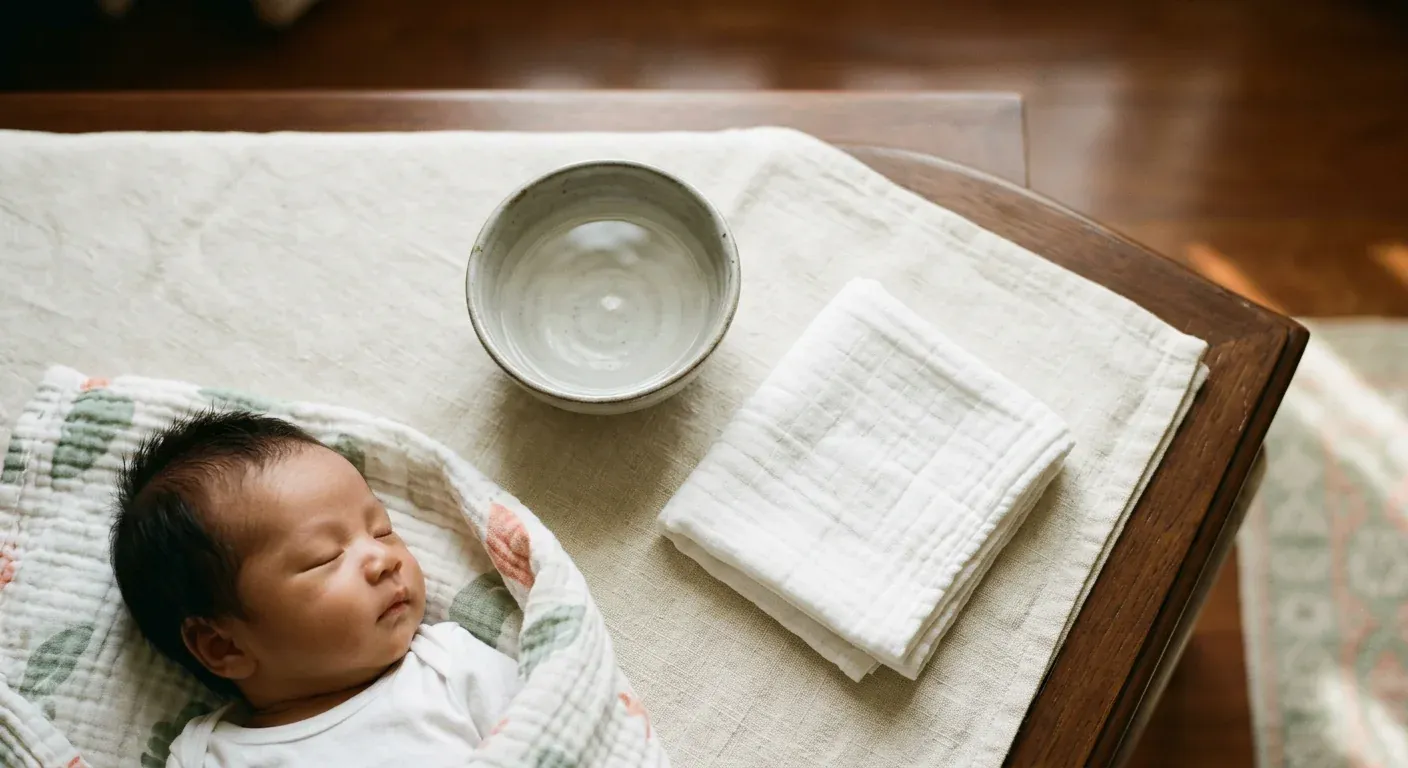
Baby acne looks like something is wrong with your baby's skin — but usually nothing is. AAD: it "tends to go away on its own in a few weeks to months." The key word is leave it alone.
Around 2 to 3 weeks after birth, small red bumps appear on your newborn's cheeks, forehead, and nose. Many parents panic, thinking it's a milk allergy or a soap reaction. The truth: it's baby acne (neonatal acne), and about 1 in 5 newborns get it.
The American Academy of Dermatology (AAD) [1] puts it directly: baby acne "is generally nothing to worry about. It rarely causes a scar and tends to go away on its own in a few weeks to months."
This guide draws on AAD [1] — what baby acne is, how to care for it, and when to see a doctor.
What baby acne is
Baby acne is small red bumps or pus-tipped bumps on a newborn's face. Look for:
- Small red or pus-tipped bumps on cheeks, nose, forehead, chin
- Sometimes spreading to the chest or back of the neck
- No itch, no pain — your baby doesn't feel it
- Skin around the bumps may look slightly red
- Affects roughly 1 in 5 newborns (~20%)
Why it happens
The exact cause isn't fully understood — the leading theory is that maternal hormones crossing the placenta in late pregnancy stimulate your baby's oil glands, the same mechanism behind cradle cap [3]. So baby acne is not caused by:
- Hygiene — it's not because you don't bathe your baby enough
- Diet — not from breast milk or formula
- Diaper or soap allergy
- Anything you did or didn't do
Neonatal vs. infantile acne — two different windows
AAD [1] draws a clear line:
Neonatal acne — onset before 6 weeks
- Typically appears around age 2 weeks
- Clears on its own in a few weeks to a few months
- Doesn't scar
- No treatment needed
Infantile acne — onset after 6 weeks
- Typically appears around age 3–6 months
- Resolves within 6 months to 1 year (sometimes longer)
- Can scar if left unmanaged
- AAD recommends seeing a dermatologist to confirm the diagnosis and guide care
If acne-like bumps appear after 6 weeks of age, talk to your pediatrician or a dermatologist — not because it's dangerous, but to rule out other conditions like eczema or contact rash.
Home care
AAD [1] keeps the routine simple:
1. Wash with lukewarm water
- Lukewarm water only — no fancy products
- A soft cloth, dampened, dabbed gently on the face
- Pat dry with a soft cloth
2. No scrubbing
A baby's skin is thin and easily irritated. Scrubbing makes acne worse, not better.
3. Pause oily products
- Lotions, creams, or baby oils on the face can clog pores
- If you've been using these, stop using them on the affected area for a while
4. Wait it out
This is the key — baby acne clears on its own without intervention. Letting your baby's skin manage itself is the best plan.
What NOT to do
AAD [1] is explicit:
"Never put acne medicine or acne wash on your baby's skin, unless your child's dermatologist or pediatrician recommends it."
Avoid:
- Adult acne medication — benzoyl peroxide, salicylic acid, retinoids — too harsh for baby skin
- Acne washes or toners
- Squeezing or picking the bumps — risk of infection and scarring
- Adult soap or fragranced products
- Alcohol, lemon juice, or herbal remedies
The bumps clear on their own. Touching them only makes it worse.
Other conditions that look like baby acne
Newborns have several skin findings that can mimic acne but aren't:
Milia
Tiny white bumps on the nose, cheeks, chin — caused by trapped keratin in pores, not acne. Resolves in 2–4 weeks.
Erythema toxicum
Red blotches with white centres, common in newborns aged 2–5 days. Looks alarming but harmless. Clears in days.
Heat rash
Tiny bumps in warm/sweaty areas like the neck and back — from blocked sweat. Different from acne, which appears on the face.
Eczema (atopic dermatitis)
Dry patchy skin, itchy, sometimes weeping — different from acne, which doesn't itch and doesn't ooze.
If you can't tell which it is, your pediatrician is the right call.
When to see a doctor
Most baby acne doesn't need a doctor's visit. AAD [1] advises consulting one if:
- Your baby is older than 6 weeks when bumps first appear (could be infantile acne)
- Bumps haven't cleared in 3 months despite correct home care
- Spreading widely beyond the face, or the bumps look like large lesions
- Oozing fluid, pus, or blood
- Your baby seems to be in pain or cries unusually when the area is touched
- The skin around the bumps is swollen or red — possible infection
Common myths
"It's because of what I'm eating while breastfeeding"
Untrue — baby acne is hormonal, not dietary. You don't need to change what you eat.
"I should clean it with alcohol"
Opposite — alcohol dries out a baby's thin skin and irritates it, making acne worse.
"I should use acne cream"
Don't — AAD [1] is explicit that acne medication should never be used on baby skin unless a dermatologist or pediatrician prescribes it.
Summary
- Baby acne is normal — affects ~1 in 5 newborns, caused by maternal hormones
- Clears on its own in a few weeks to months without scarring (in neonatal acne)
- Lukewarm water + soft cloth — that's the whole routine
- Never use acne medication, adult soap, alcohol, or squeezing
- Pause lotions and oils on the face while bumps are present
- See a doctor if: baby is over 6 weeks at first onset · doesn't clear in 3 months · pus or red swelling
It looks more dramatic than it is. Let your baby's skin handle this on its own — clear cheeks come back soon.